Sunday, October 12, 2014

Black-vented Shearwaters on San Diego pelagic trip

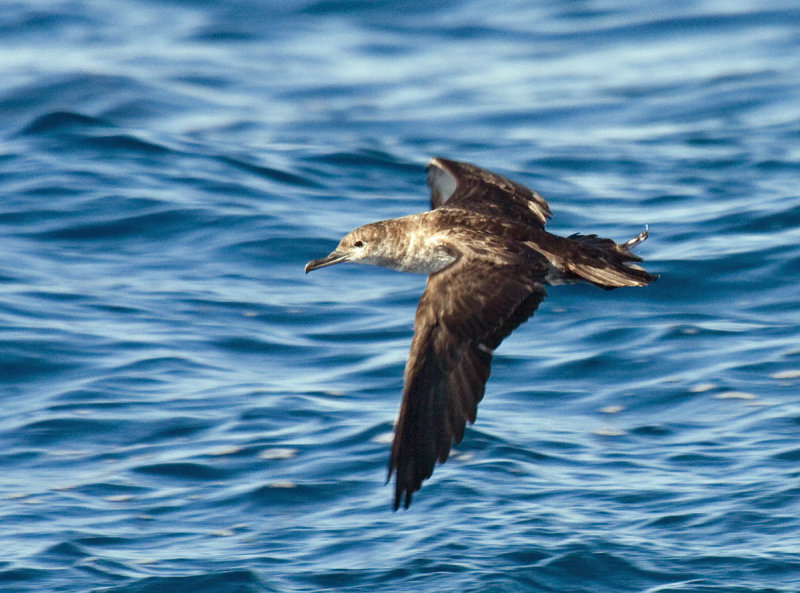
Black-vented Shearwater
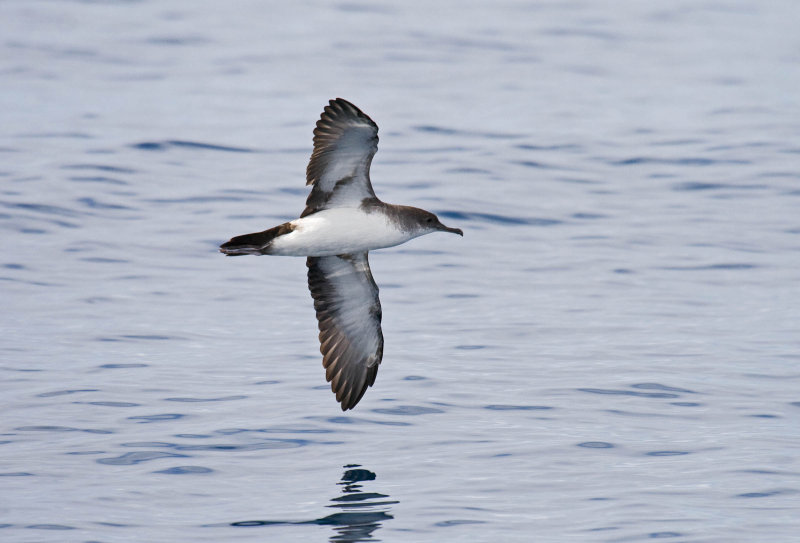
Black-vented Shearwater. Off San Diego, California. September 20, 2014. Greg Gillson.
This shearwater is rather unique in that it feeds inshore, and is often seen from shore. It nests on islands off Baja, Mexico, and is common off southern and central California in summer and fall.

It was formerly considered a subspecies of Manx Shearwater. Like that species it is smaller with rapid wing beats and short glides in commuting flight. Unlike the striking black-and-white Manx Shearwaters, Black-vented Shearwaters are smudgier and grayer where the dark upper parts meet the white under parts. Manx Shearwaters have white vents--the body feathers between and back from the legs and to the base of the tail. As you can see in the above photo, the body feathers under the tail are dark on Black-vented.

Really, though, in plumage this species looks like a miniature Pink-footed Shearwater--including the wide variance in under wing mottling and dusky "hooded" look to the head of many individuals. The Pink-footed Shearwater, however, is bigger with longer wings and deep, slow wing beats that gives a flight described as "lumbering" with long glides between. In photos you can't judge wing beats, so one must compare the all-dark bill of Black-vented Shearwater with the big pink bill and dark tip of Pink-footed Shearwater.

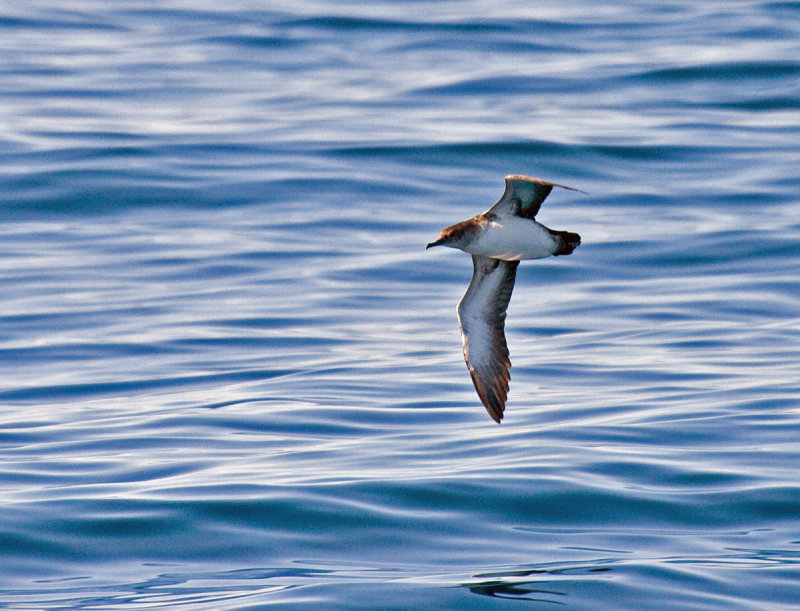
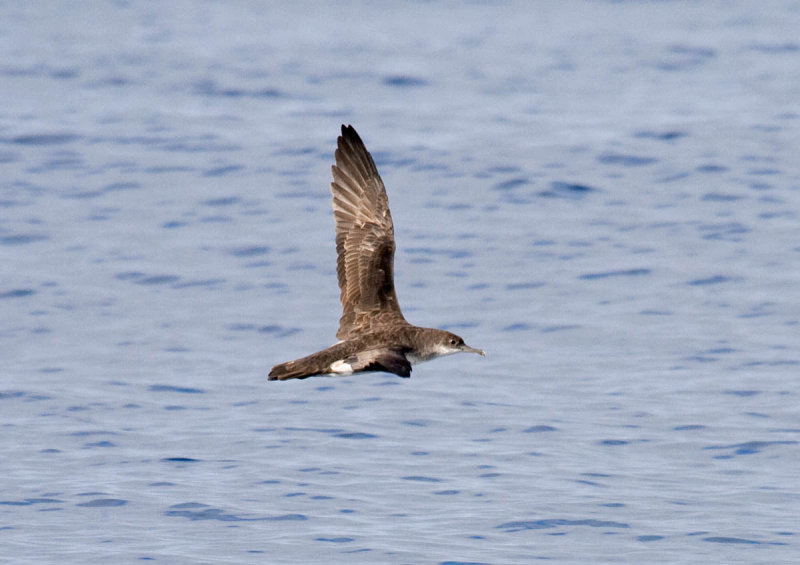
The following photos are of Black-vented Shearwaters off San Diego, California on September 20 and October 4, 2014.

Black-vented Shearwater
This Black-vented Shearwater shows white "saddle bags" on the side of the rump. This is more often
associated with other small black-and-white shearwaters like Townsend's and Newell's.
Black-vented Shearwater

Black-vented Shearwater

Black-vented Shearwater
Pale-headed individual with larger bill.
Black-vented Shearwater

Black-vented Shearwater
Very pale headed individual.

Saturday, October 11, 2014

Another San Diego pelagic trip

San Diego at sunset. October 4, 2014. Greg Gillson.
Last month I took a pelagic trip from San Diego. Last week I took another. I'll be sharing some bird photos from those trips over the next few posts.

The birds were nothing special on this trip. Murrelets and storm-petrels were all very distant (most flew away from the boat while still 500 feet away). No rarities.

The weather was warm, the sky blue, and seas calm. The photos accompanying this post shows you why I enjoy pelagic trips--even if the birds were just ordinary seabirds this day.

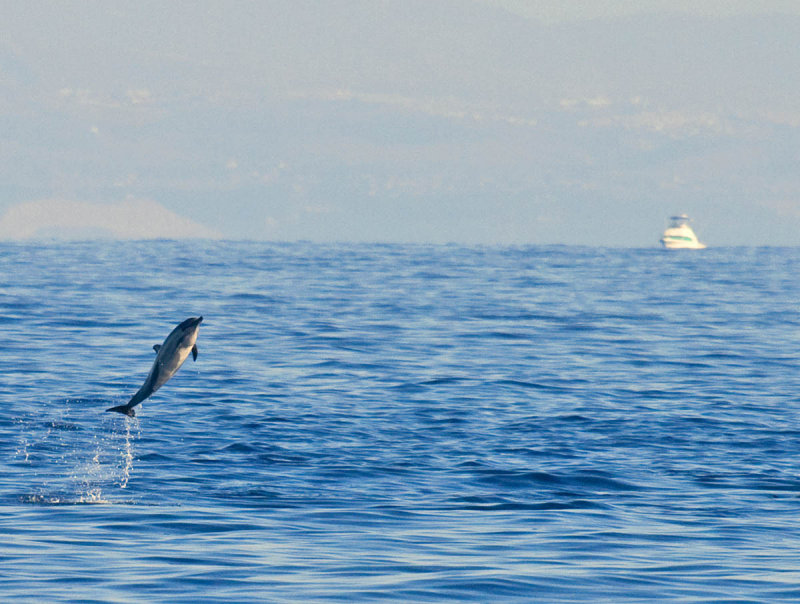
Common Dolphin
Common Dolphin
Pelagic trip aboard Grande
Pelagic trip aboard Grande. October 4, 2014.
Pilot Whale
Pilot Whale off San Diego. October 4, 2014. Greg Gillson.
Pilot Whale
Pilot Whale
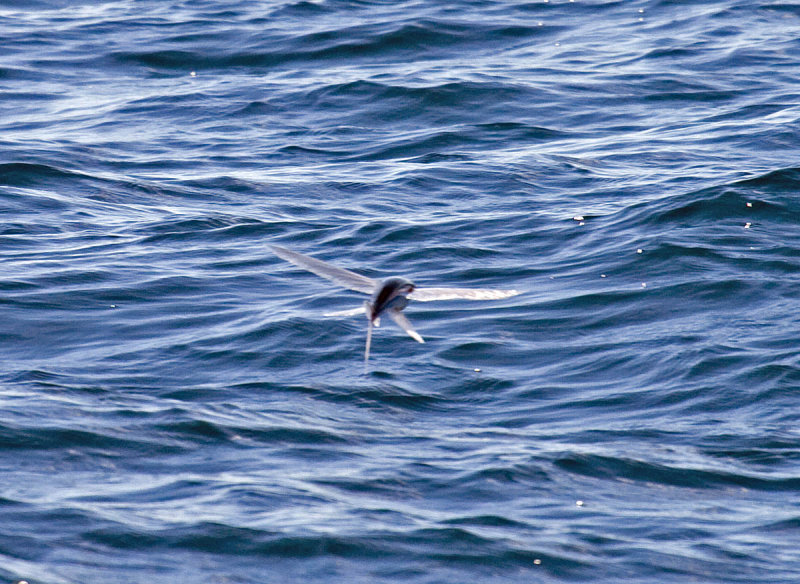
California Flying Fish.
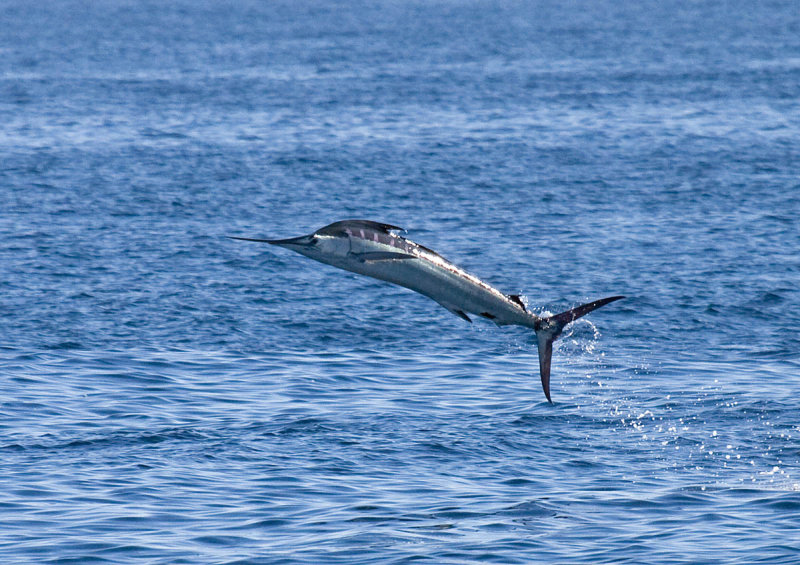
Striped Marlin
Striped Marlin.

Wednesday, October 8, 2014

I love boobies! Brown Booby on San Diego pelagic trip

Brown Booby
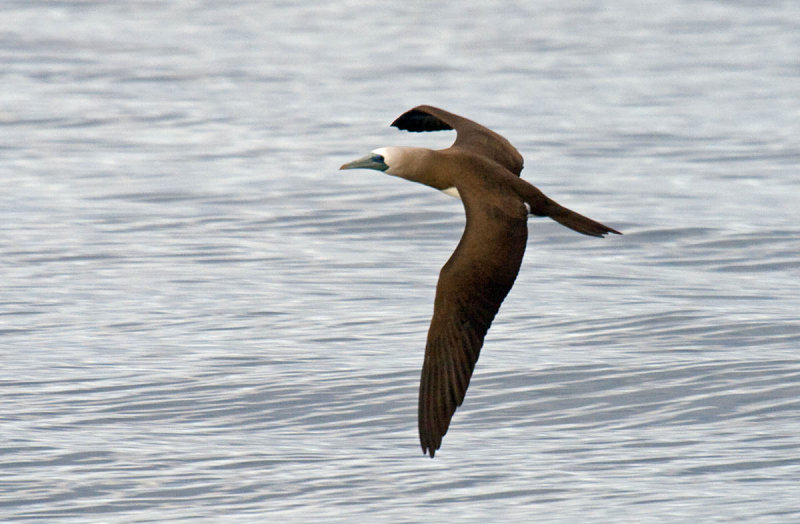
Brown Booby. On a pelagic trip 3 miles off San Diego, California. September 21, 2014. Greg Gillson.
In 1934 Henry Miller wrote a book where he called a woman's breasts "boobies." Since then, that has become the first and primary meaning for that word in American English, sometimes with a vulgar connotation. However this meaning of the word has moved into mainstream usage. For instance, in 2000 the Keep-A-Breast Foundation coined the phrase: "I love boobies" to bring awareness to breast cancer.

Prior to that, however, a booby was the term for an awkward or stupid person. It is this meaning of the word that is the basis for naming a group of tropical seabirds. It seems that starving sailors in times past had no respect for birds with no natural fear of man. Thus, we have boobies, gooney birds (albatrosses), and the dodo. All these words mean foolish or stupid (a.k.a. "an easy dinner" or "it tastes like chicken").

Brown Booby

Brown Boobies are found in tropical oceans all around the world (but with a gap in the central and eastern South Pacific). In North America they are found in the Caribbean and southern Atlantic States. The white head of this bird in the photos is unique to the male Brown Booby of the "Brewster's" race found primarily off West Mexico. Identifying the gender of Brown Boobies elsewhere in the world is a bit more difficult. Breeding males have blue facial skin at the base of the bill while females have greenish facial skin. In these photos you can make out the bluish hue of the facial skin around the eyes.

Brown Boobies began breeding on the Coronado Islands a few years ago. These islands are about 9 miles off Tijuana, Mexico, and 15 miles south of San Diego Bay. Brown Boobies and, recently, a few Blue-footed Boobies have become regular visitors off beaches near the Mexican border. I haven't actually gone to look for them there yet at the end of Seacoast Drive in Imperial Beach.

Brown Booby

There are 7 species of boobies and 3 closely related species of gannets in the world. I've seen Brown, Blue-footed, and Masked boobies. But I have a special affinity for brown boobies.

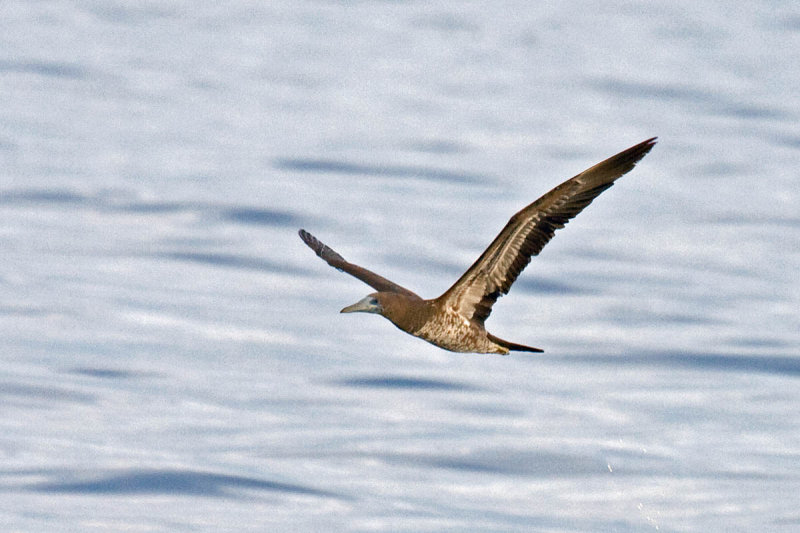
The first Brown Booby I ever saw was while leading a pelagic trip off Depoe Bay, Oregon in October 1998. This large dark bird was flying directly at the boat, making it difficult to see exactly what it was. But I knew it was big, perhaps a skua. As it approached quite near I finally could see the classic "pointed at both ends" look. Since this was the first record of a booby of any kind in Oregon--and I'd never seen a booby other than in my field guides--I wasn't really prepared, and couldn't remember the name immediately. According to a nearby passenger I shouted out a stammering "b-b-b-b-booby!" It took a while to identify the bird to species as it was a juvenile bird, very dark, similar to the bird in the photo below. It is always exciting to discover a first state record!

Brown Booby
This immature Brown Booby off San Diego in September 2014 is actually paler
than the first one I identified off Depoe Bay, Oregon in October 1998.
A few years later, in October 2012 another Brown Booby was spotted and photographed from a pelagic trip I organized and led. This time the bird was an adult female and was, by then, a 5th state record for Oregon.

Besides my two Oregon sightings, I've seen Brown Boobies in Mexico a few times (including 90 individuals in the harbor at Mazatlan). But the three birds I saw last month (two photographed in this article) were my first for California.

Tuesday, October 7, 2014

Western Kingbird at Fort Rosecrans National Cemetery

Western Kingbird
Western Kingbird. Fort Rosecrans National Cemetery, San Diego, California. September 14, 2014. Greg Gillson.
Here's one more photo from my visit to Fort Rosecrans National Cemetery last month. It appears to be a juvenile Western Kingbird with broad pale upper wing coverts and a little pale on the head.

Wednesday, October 1, 2014

Lesser Yellowlegs at San Luis Rey River Mouth

Lesser Yellowlegs
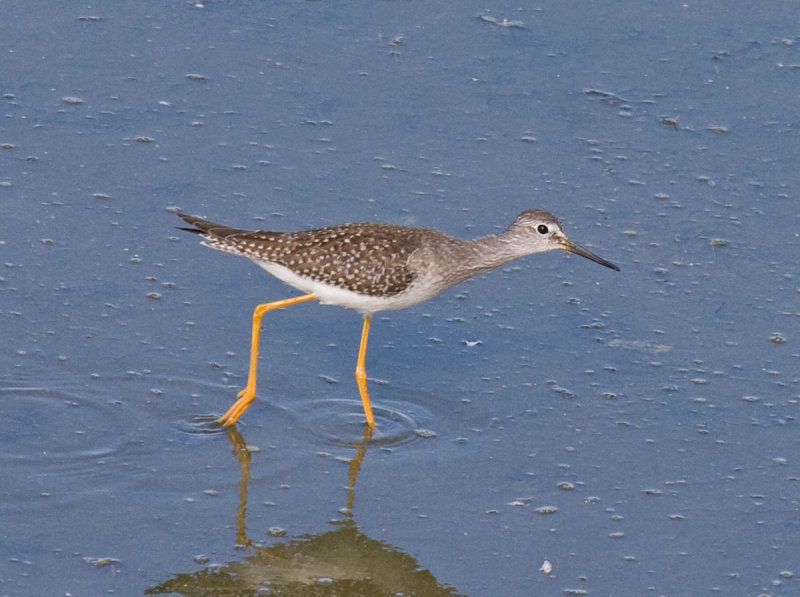
Lesser Yellowlegs. San Luis Rey River mouth, Oceanside, California. September 7, 2014. Greg Gillson.
The Lesser Yellowlegs has taken a population hit in the past 20 years. You'd think that nesting in the boreal forest of northern Canada they'd be secure, but evidently not. Logging, pesticides, and hunting on their wintering grounds in the Caribbean all take their toll.

The 1981 book by Garrett and Dunn: "Birds of Southern California: status and distribution" says that it was a fairly common fall migrant in southern California coastal estuaries. But this is no longer true. Even one bird, now, gets flagged as unusual when reported on eBird in San Diego County.

One other reason that they may be on the eBird rare bird list for the county is their common larger look-a-like relative, the Greater Yellowlegs, may be mistaken for them. If you are a bit uncertain on just how to tell Lesser Yellowlegs from Greater Yellowlegs, I wrote an identification article on this subject 4 years ago that shows an ID tip not found in most field guides.

There have been 1 to 6 birds reported most of the fall (perhaps many different birds over time?) at San Luis Rey River mouth. I saw them there at least twice. I believe I saw (and heard) one a third time, but the bird was much more distant than the one photographed above, and my photo of the other bird was not diagnostic.