|
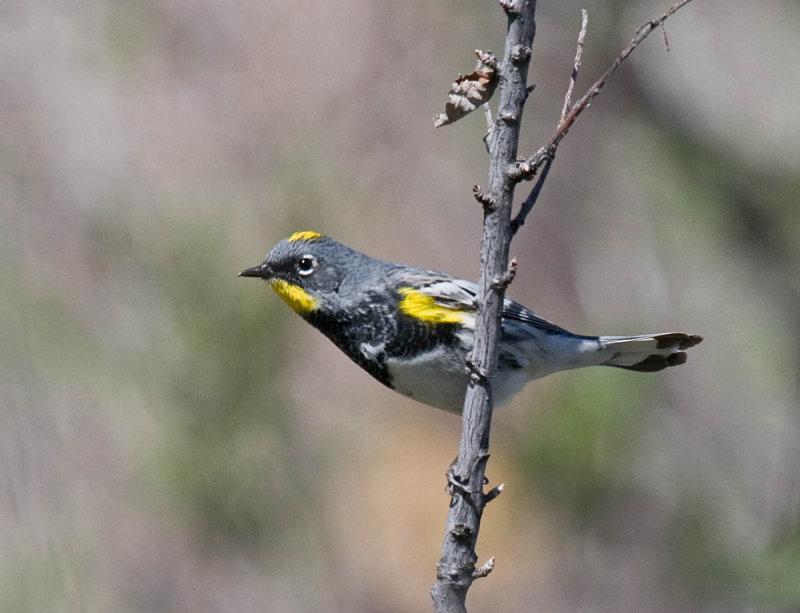
| Yellow-rumped (Audubon's) Warbler. Cuyamaco Rancho State Park, California. March 22, 2015. Greg Gillson. |
In October 2003, California's largest historical fire, the 280,000 acre
Cedar Fire, burned through nearly the entirety of
Cuyamaca Rancho State Park. (Cuyamaca is pronounced "KWEE-e-MAK'-e") This 26,000 acre park in the Laguna Mountains, 40 miles ENE of the Pacific Ocean and the city of San Diego, is between 4600-6500 feet elevation. It was extensively timbered in white fir, incense cedar, Jeffrey pine, Coulter pine, sugar pine, and black oak. That was before.
Though regenerating nicely with bushes and saplings, it will take 80-150 years before the forest will be similar to what it was. That's
if the climate returns to the the wetter conditions of 20 years ago or more. There are only a few spots in the park that escaped the conflagration. Two locations where some pine, fir, and cedar still stand are at Paso Picacho Campground and nearby Stonewall Mine.
 |
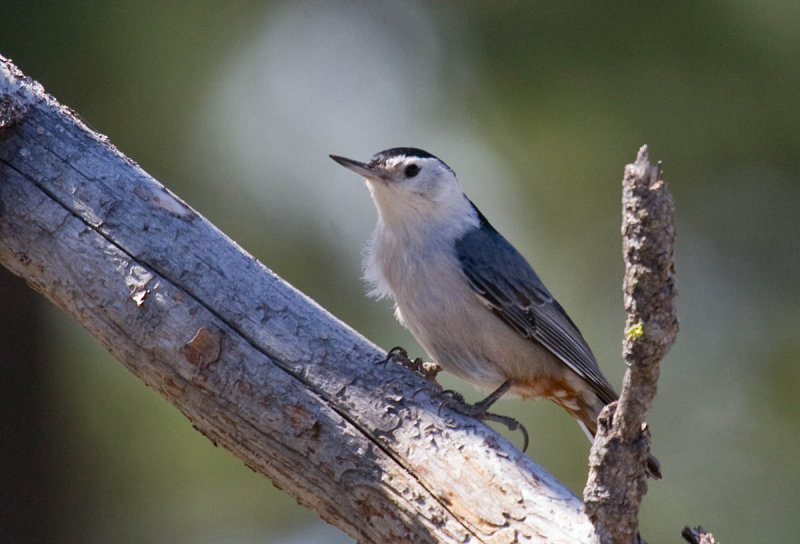
| White-breasted Nuthatch |
Named for General Stonewall Jackson, the gold mine was active in the 1870's-80's. A town sprung up, then quickly disappeared when the gold ran out.
There is a very good recent (August 2014) hiking guide to this spot on the
Modern Hiker web site, including Lake Cuyamaca, that I didn't hike to. My hike was only 1/2 mile around the mine trail. There is another trail that connects to Fletcher Island on the lake. Combining both hikes is 2.75 miles round trip with 315 feet elevation change described as an "easy" hike.
The
eBird Hotspot page for this site lists 147 species, which is excellent for the high forest and meadows. Judging from the list of birds, that 147 species includes birds seen at Lake Cuyamaca, too, even though there is a separate Hotspot for that lake. My visit of 1 hour and 20 minutes in late March had a more typical
23 species of primarily forest birds.
 |
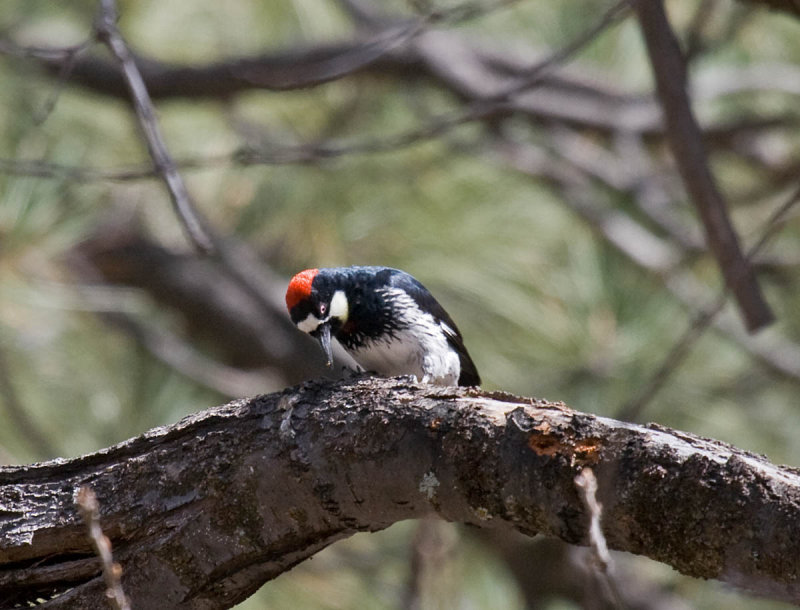
| Acorn Woodpecker |
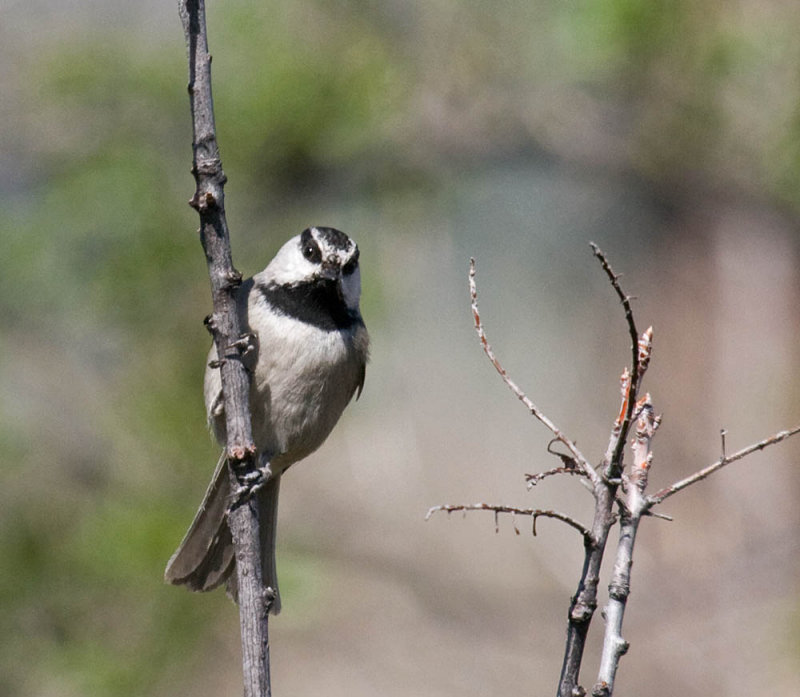
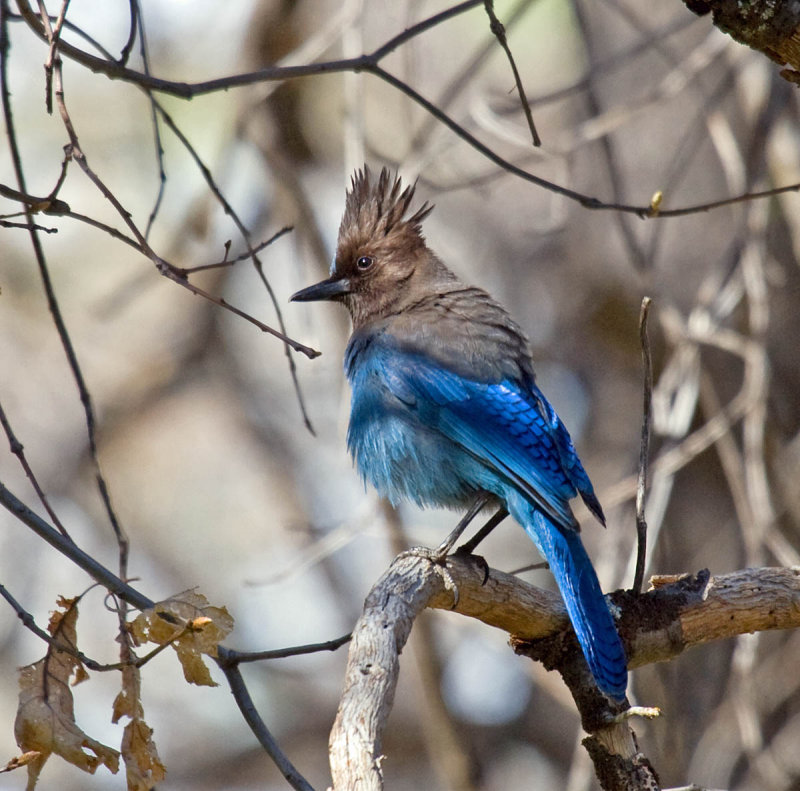
I found the typical Acorn, Nuttall's, and Hairy Woodpeckers, Pygmy and White-breasted Nuthatches, Steller's Jays and Western Scrub-Jays, Mountain Chickadees and Oak Titmouses, Western Bluebirds, and Yellow-rumped Warblers. I also spied an adult Bald Eagle soaring high in the open sky above the nearby meadows.
 |
| Mountain Chickadee |
Sapsuckers, including Williamson's, Red-naped, and Red-breasted, seem regular, especially in fall and winter. I didn't find any, though. The hawk-like screeching I chased down, that sapsuckers sometimes give, was actually a Red-shouldered Hawk.
Another bird found here is Wild Turkey. I glimpsed one running across the road down by the lake as I drove by.
 |
| Steller's Jay |
Here is a very recent birding blog post (Part 1) about Lake Cuyamaca from
Jo's Morning Walk.
Oh, and
Part 2 is up now.