Saturday, January 31, 2015

When Greg met Phoebe

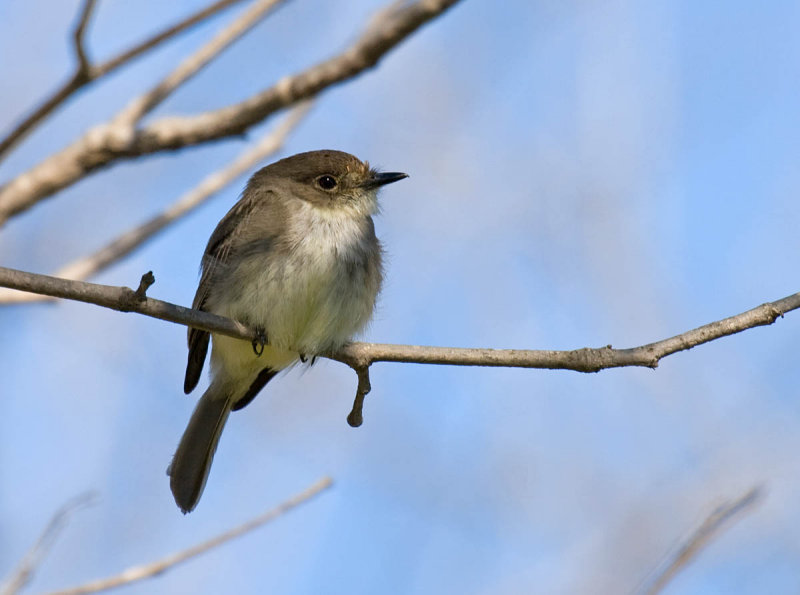
Eastern Phoebe
Eastern Phoebe. Tijuana River Valley, San Diego, California. January 18, 2015. Greg Gillson.
There are over 400 species of New World Tyrant Flycatchers, most in the tropics. Of these, only 3 are named with the Greek woman's name of Phoebe. Lacking eye rings and wing bars (except for 2 South American subspecies of Black Phoebe) as many other flycatchers, the tail wagging behavior and sweet "fee-bee" (Phoebe) calls make identification fairly straightforward. Phoebes nest commonly around people--often on back porches and out buildings.

On January 18, I made a successful effort to find and photograph a rather rare Eastern Phoebe that was fairly reliable down at the Bird and Butterfly Garden [site guide] in the Tijuana River Valley. As it turned out, I happened to photograph all three species of Phoebes this day! I present them here. Plus, I tell you the story of the very first time I met each species.

Eastern Phoebes breed from the Atlantic to the edges of the Rocky Mountains in Canada and the United States. In winter they move south to extreme southern US south into Central America. They are olive above with whitish breast and faintly yellow belly.

I first met Eastern Phoebe: January 9, 1982 at a golf course in Ventura, California. Discovered originally by others in December, but I didn't know about it. I found and identified this bird myself, independently--and took really good notes.

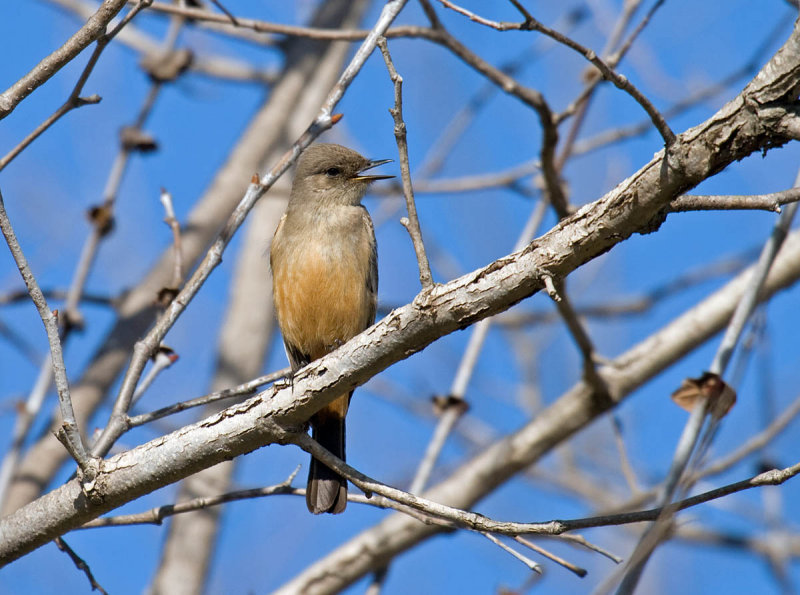
Say's Phoebe
Say's Phoebe. Tijuana River Valley, San Diego, California. January 18, 2015. Greg Gillson.
Say's Phoebes are found in drier lands of western North America--from the 100th meridian westward, and reach all the way to Alaska in summer. In winter, northern birds move south as far as northern Central America. Vagrants can reach the East Coast in winter. They are grayish-brown with a black tail and buffy cinnamon colored below.

I first met Say's Phoebe: November 20, 1972. Albany, Oregon. This was one of the first birds I identified when I began recording birds in my backyard as a school project.

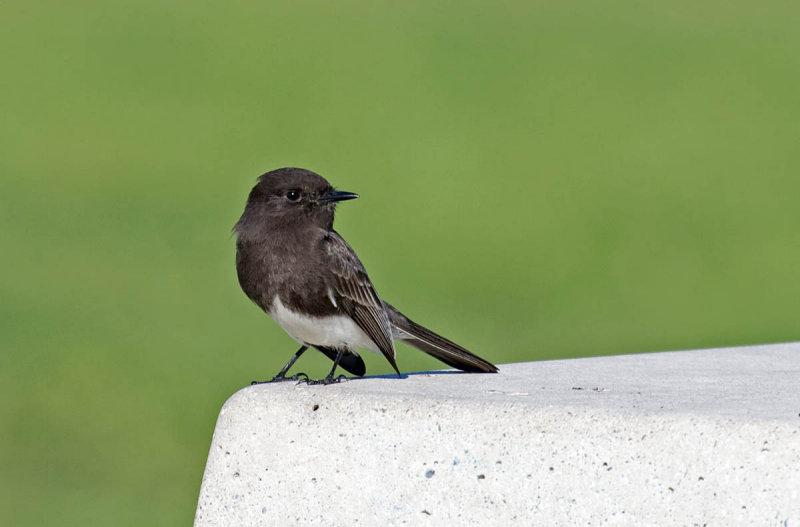
Black Phoebe
Black Phoebe. Chula Vista, California. January 18, 2015. Greg Gillson.
Black Phoebes are less migratory than the other species. They are resident from SW Oregon, through California and Arizona all the way to Argentina in South America. They are almost always found near water. They are blackish except for striking white belly and undertail coverts.

I first met Black Phoebe: March 22, 1976. Death Valley, California. I spent a week in Death Valley with my parents and grandparents during spring break.

Tuesday, January 27, 2015

Life Bird: Thick-billed Kingbird

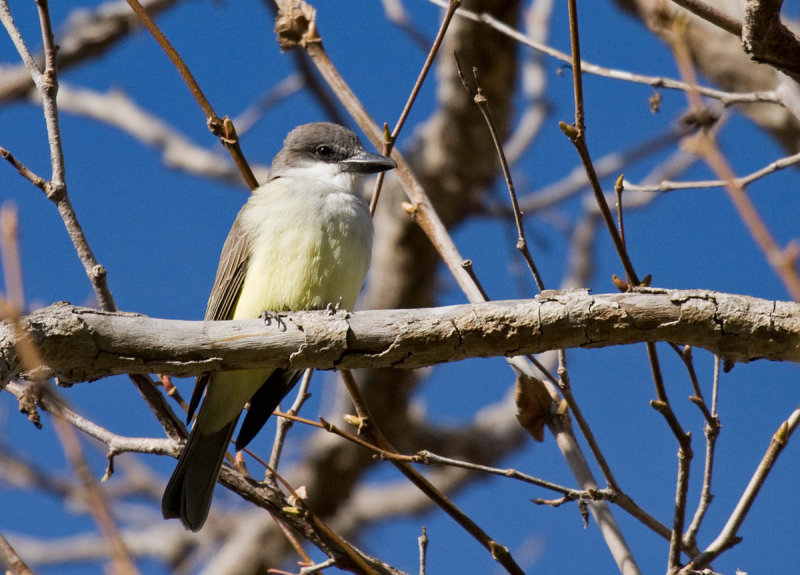
Thick-billed Kingbird
Thick-billed Kingbird. Chula Vista, California. January 18, 2015. Greg Gillson.
In December 2010 an adult female Thick-billed Kingbird was found in an apartment complex bordering the Poggi Creek Greenbelt in Chula Vista. It has returned for each of the past 5 winters.

Last week I took a trip down to the south end of San Diego Bay and the Tijuana River Valley with this bird one of several on my list. After a half hour wandering through this apartment complex and disturbing most of the dogs more than once, I gave up. As I was driving out of my parking space, I spotted it in the top of a sycamore behind one of the apartment buildings. How many times does this happen, that you give up on a stake-out rarity and view it from your car as you are leaving? [This reminds me that Robert Mortensen claims adding 6 life birds while peeing in the woods. Conversely, I know many birders bemoan how the call of nature has robbed them of life birds that showed up for the group while they were momentarily away....]

Where does this individual bird go in summer? Probably Mexico, as birds breed along the western Mexico mainland and reach up to SE Arizona in summer. They also occur at the very tip of Baja. (Map)

They seem to really like sycamores and lowland stream canyons in desert habitat.

Thick-billed Kingbird

Thick-billed Kingbird

Sunday, January 25, 2015

South End of the Salton Sea: Day 2

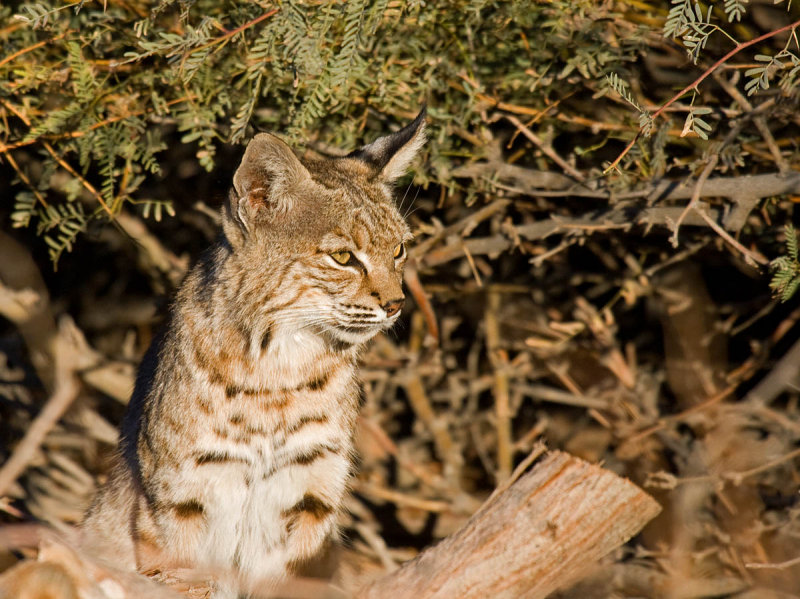
Bobcat
Bobcat. Salton Sea NWR, Calipatria, California. December 27, 2014. Greg Gillson.
My report from Day 1 is here.

While Marlene slept in at the motel in Westmorland, I rose at dawn and drove to the Sonny Bono Salton Sea National Wildlife Refuge again. The species at the Visitor Center were about the same as the previous afternoon--including Abert's Towhees, Common Ground-Doves, and a Verdin, along with lots of flyover waterfowl, gulls, and blackbirds.

From the parking lot at the Visitor Center the Rock Hill Trail leads out to the Salton Sea shoreline. It's probably a bit over a mile out-and-back.

Almost immediately I came upon a mother Bobcat and her two nearly fully grown cubs--the same size, just a bit thinner and paler colored. Mom didn't seem too concerned with me as she sat in the sun under a mesquite tree watching her young ones try to hide from me.

Bobcat

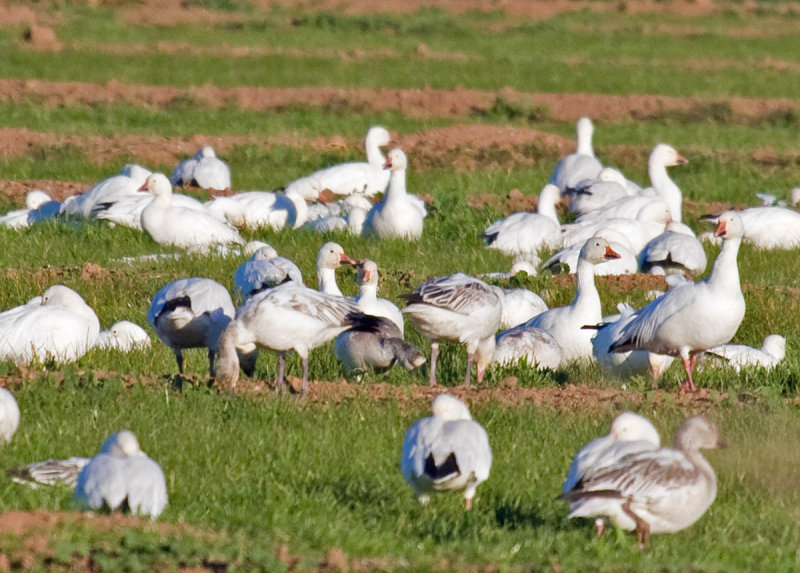
The trail led out past some fields where a flock of Snow Geese was resting. There were several smaller Ross's Geese in the flock, and Cattle Egrets were working some of the furrows. A Ross's Goose shows well in the photo below on the back left, facing left. Look for the tiny bill and little round head.

Snow Geese
Do you spot the Ross's Goose among these Snow Geese?
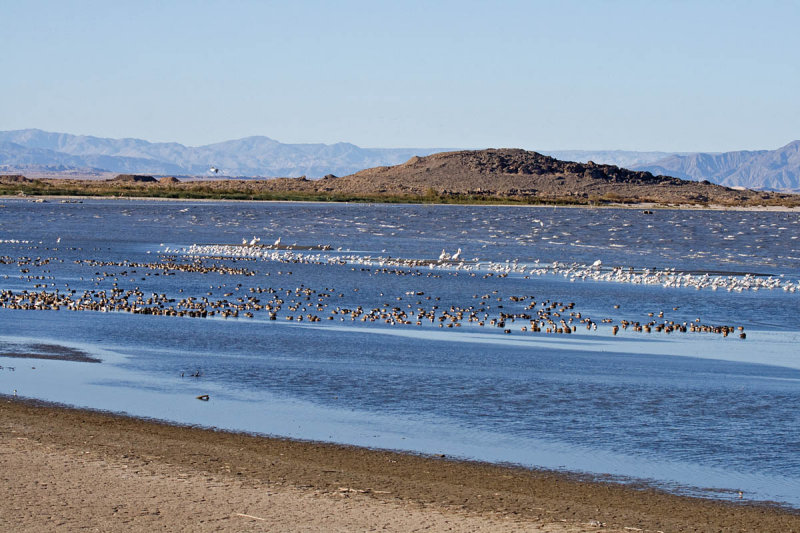
The wind was blowing pretty good, unlike the previous day. When I reached the shoreline there were a couple thousand birds in the shallows. Pintails, Shovelers, and Ring-billed Gulls were most abundant. In an adjoining compound were 1500 Double-crested Cormorants.

Salton Sea
Salton Sea NWR, Calipatria, California. December 27, 2014. Greg Gillson.
A few shorebirds were present, including American Avocets, a couple Black-bellied Plovers, Killdeer, Greater Yellowlegs, and several Least Sandpipers and Long-billed Dowitchers, and about 20 Black-necked Stilts, including this one:

Black-necked Stilt
Black-necked Stilt. Salton Sea NWR, Calipatria, California. December 27, 2014. Greg Gillson.
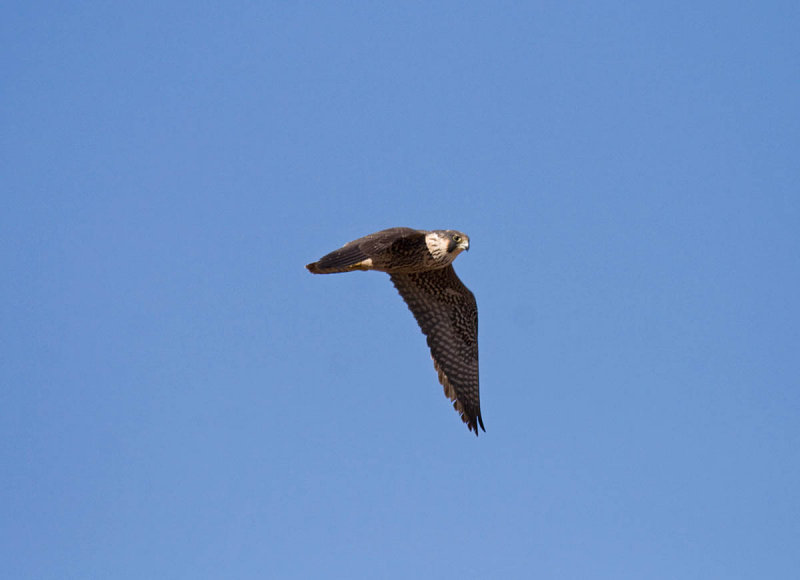
It was soon time to retrieve Marlene from the motel and continue on our journey. One the way back I stopped along a newly plowed field near Brawley to see if I could get better looks at yesterday's life bird: Mountain Plover. However, just as I got ready to scan the field a raptor came screaming by. I managed to get this photo out the car window:

Peregrine Falcon
Peregrine Falcon. Brawley, California. December 27, 2014. Greg Gillson.
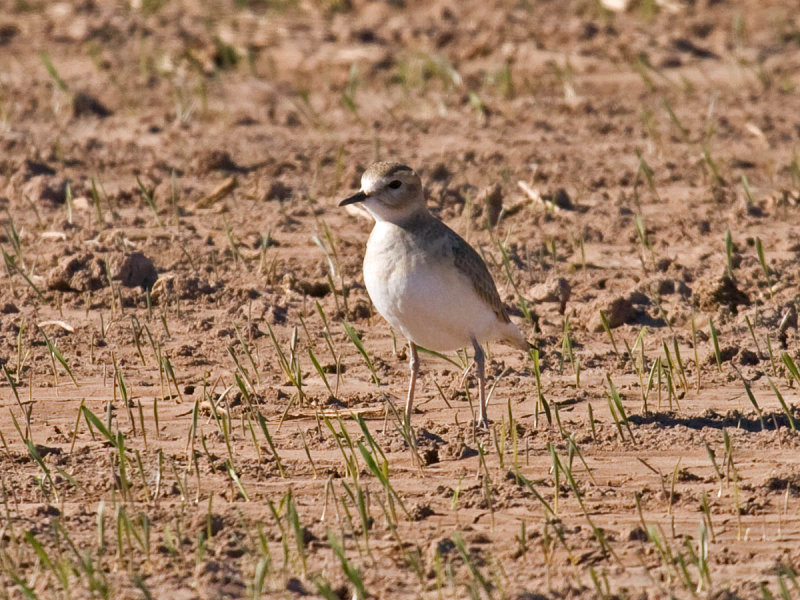
After this disruption passed by it wasn't long before the little white specks in the field started walking closer. A little patience, and some repositioning of the car I used as my portable blind and, yes!

Mountain Plover
Mountain Plover. Brawley, California. December 27, 2014. Greg Gillson.

Wednesday, January 21, 2015

South End of the Salton Sea: Day 1 (Looking back)

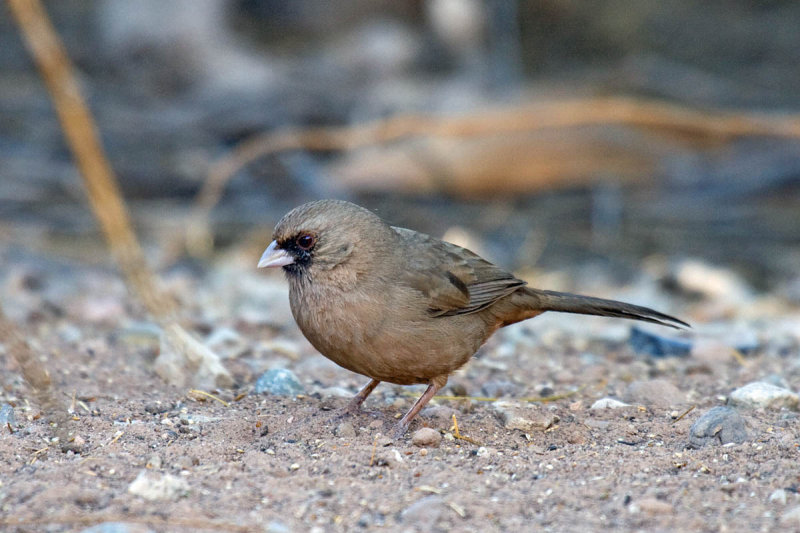
Abert's Towhee
Abert's Towhee. Salton Sea NWR, Calipatria, California. December 26, 2014. Greg Gillson.
It had been 30 years and 2 months since I last had seen the black-faced Abert's Towhee. Guess what? It was right here on the south end of the Salton Sea.

It was October 6, 1984. Eldest daughter, Leslie, had just turned 4 years old only 3 weeks earlier. She and I headed out for 2 days at the Salton Sea--600 miles round trip. Leslie's mother and 2 younger sisters remained behind at home in Ventura, California. The temperature was over 100 degrees. The Salton Sea rotting smell pervaded everything, coming off the algae-bloom-strewn beach made primarily of dead fish bones. We ate cereal and sandwiches from the cooler, and slept out on the ground on a tarp at Finney Lake, watching the stars. We drove and walked, watched birds and had a wonderful time. I suspect that Leslie was too young to remember, but it is a fond father-daughter memory for me. (I'm hoping that Marlene doesn't remember, being left behind, as she was, with a 2 year old and newborn. I was only 26--What did I know? At least I think we were in an apartment then, and not still in the school bus we lived in for a year on the beach.)

So here I was on December 26, 2014, a mere 30 years after my last visit. This time with Marlene on a 4-day driving vacation. We had spent the previous night and this morning in Borrego Springs in eastern San Diego County. After lunch we drove farther east through the desert into Imperial County to Brawley at the south end of the Salton Sea.

By 1:30 pm we were driving north from Brawley on Lack Rd, past irrigated fields of spinach, cauliflower, onions, and broccoli. At one smoothly plowed and disced field I spied about 65 pale Killdeer-looking shorebirds way out in the field, about 1/4 mile distant. Good and bad. My life Mountain Plovers, but so far away I really couldn't make out field marks--I mean, really, how could I explain to someone why they weren't Black-bellied Plovers? Not how you want a life bird.

Snow Goose
Snow Goose. Salton Sea NWR, Calipatria, California. December 26, 2014. Greg Gillson.
Slowly driving the farm fields we spotted over 500 Snow and 50 Ross's geese. There was even one blue-phased Snow Goose. Cattle Egrets were plentiful. One field had about 45 Sandhill Cranes.

Gambel's Quail
Gambel's Quail. Salton Sea NWR, Calipatria, California. December 26, 2014. Greg Gillson.
At 3 pm we finally entered the parking lot of the Visitor Center at Sonny Bono Salton Sea National Wildlife Refuge (it's hard to get this image out of my mind). That's where I photographed the Abert's Towhee that begins this article. The Abert's Towhees were at the bird feeders with Mourning Doves, Common Ground-Doves, and Gambel's Quail. Oh, and a newly naturalized species which wasn't present in 1984--the Eurasian Collared-Doves.

Common Ground-Dove
Common Ground-Dove. Salton Sea NWR, Calipatria, California. December 26, 2014. Greg Gillson.
Just before dusk we drove down Garst Rd to the Red Hill Marina....

Rubble of Red Hill Marina
This rubble is all that's left of Red Hill Marina--a once rather famous birding location. December 26, 2014. Greg Gillson.
The Salton Sea was created accidentally in 1905 by a breach in an irrigation canal bringing water from the Colorado River into this valley. It took 2 years to stop the breach. During that time all the water of the Colorado River flowed into this low sink, 277 feet below sea level, and created this lake, 35 miles long and 15 miles wide.

The Salton Sea was a popular vacation spot in the 1950's, but the hot sun and fertilizer run-off from the farm fields, regularly created algae blooms that sucked all the oxygen out of the water, causing mass die-offs of fish,... and a stink that eventually turned all the vacation resorts into ghost towns.

And, evidently, the Red Hill Marina also succumbed to lowering water levels and fewer and fewer visitors. There is a 14-day stay free county park here; but it looks like most of the residents are more or less permanent campers.

The Salton Sea is dying. Each year this lake increases its salt content by 1% from irrigation runoff. Already it is saltier than the Pacific Ocean. In a few years it will be too salty for any fish to live. And the lake is evaporating faster than water is entering. Fresh water from the Colorado River into the Sea is supposed to be suspended in 2017, and the lake is expected to shrink rapidly. Plans are being made for a very small fresh-water Salton Sea in the north and salt marshes in the south by 2035. Some are fighting to save the Salton Sea. But it is very likely that it will soon be a very different place.

There were still birds to be found along the canals and shore of the Salton Sea on the way in to the former Red Hill Marina. There were 5000 Ring-billed Gulls, and lots of Double-crested Cormorants and many ducks. A Greater and Lesser Yellowlegs were standing side-by-side on one dike for comparison.

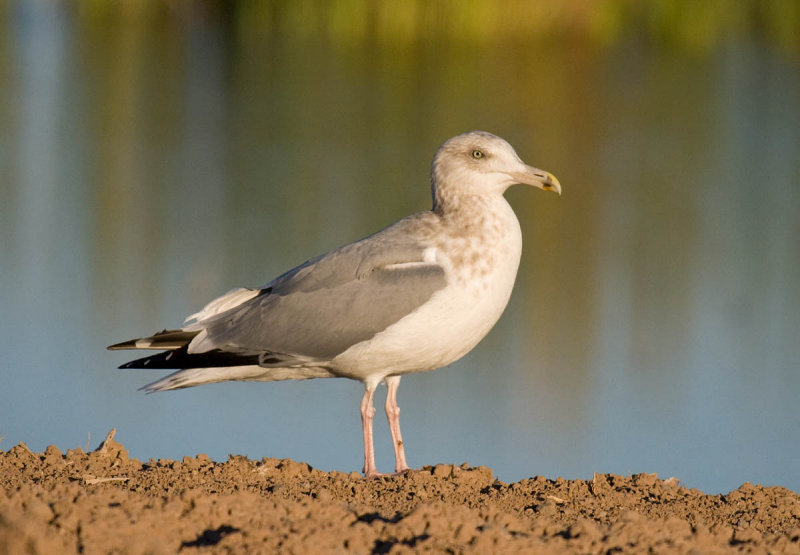
Herring Gull
Herring Gull. Red Hill, Salton Sea, Calipatria, California. December 26, 2014. Greg Gillson.
We spent the night back south 10 miles at Westmorland at a very fine Americas Best Value Inn. Then we had a nice steak dinner at the Town Pump Steakhouse.

Then we made our plans for Day 2....
Continue on to Day 2, here.

Monday, January 19, 2015

Nuttall's Woodpecker in Coral Tree

Nuttall's Woodpecker in Coral Tree
Nuttall's Woodpecker in Coral Tree. Encinitas, California. December 29, 2014. Greg Gillson.
There are many species of coral trees, often sporting huge groups of flaming red flowers. One species, the Coastal Coral Tree, native to southern Africa, is the official tree of the city of Los Angeles. (See Coral Trees in Wikipedia).

Many birds are attracted to the nectar of the flowers, including, evidently, this Nuttall's Woodpecker. This photo was taken at the San Diego Botanic Garden in Encinitas.