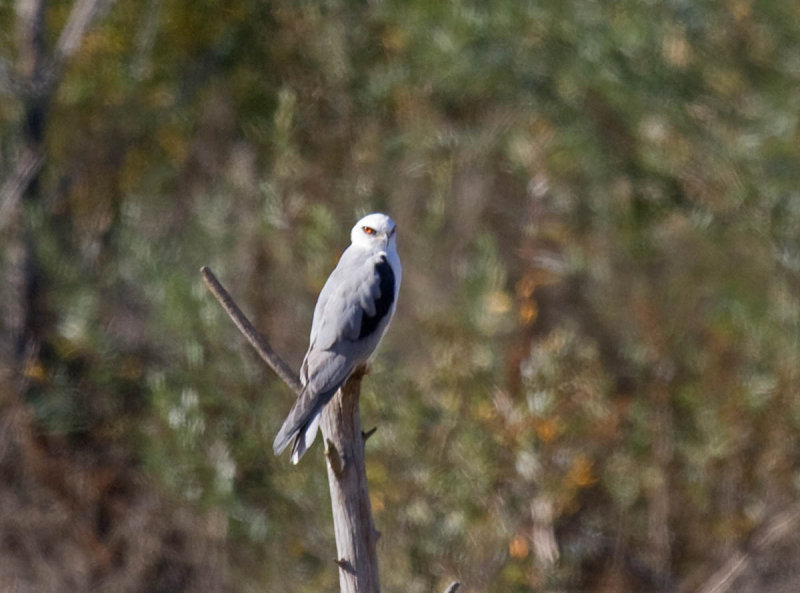
Showing posts with label birding. Show all posts

Tuesday, April 2, 2019

Fieldcraft: 5 reasons to start birding at dawn

Looking down on Kitchen Creek
Kitchen Creek just after sunrise
It's not necessarily easy to rise early and begin bird watching with the first rays of the morning sun. It's so tempting to sleep in just a bit and let it warm up outside. Being in the field at dawn is beneficial, though, for seeing more birds.

My favorite quotation concerning the benefits of dawn birding comes from Tim Rodenkirk: "If you don't want to see birds, always arrive a few hours after sunrise."

Here are five reasons why you (and I) should get up a little earlier to start birding at dawn.

1) Birds are more active at dawn

In the introduction of one of Peterson's first field guides (perhaps 1947 version of original Field Guide to the Birds?--I can't locate the quotation), he noted that birders saw more sunrises than anyone else except perhaps milkmen. (Does anyone born since 1970 even know what a milkman is?) Why did he say this? Because, to see more birds you've got to go where the birds go and get up when the birds get up.

Birds are most active in the morning. After a long cold night they want breakfast. The early bird gets the worm, the seeds, and the insects. In spring... well, we'll talk about song below.

It's sad, really, but many wildlife refuges, nature centers, and parks don't even open until the bird activity is already done for the day. 10 AM? In many places in late spring or summer the birding is effectively over by then, or earlier. The birds have eaten breakfast and will rest quietly in the shade until a brief flurry of activity near sunset.

If you start birding at 10:00 AM, you'll see less than half the birds than if you started at sunrise. Here are more reasons to start bird watching early.

2) The lovely "Golden Hour"

Professional bird and nature photographers want to catch the first rays of soft horizontal light without the harsh shadows of sunlight later in the day. That golden glow over the landscape is very special. Photographers stop taking pictures even earlier than birders end their primary birding stop.

However, I've tended to live in places with a "marine layer" of fog or overcast conditions that doesn't burn off until later morning. "May gray" and "June gloom" are terms for this weather in southern California, but it's not just a summer phenomenon. And, the San Diego area has some close taller hills and mountains so that the sun doesn't show itself until an hour or two after sunrise in some places. So I sometimes get frustrated in my attempts at "golden hour" photography. That said, though, overcast conditions can extend the activity of birds, while clear and hot weather can curtail bird activity earlier.

3) Less people and noise

You and I aren't the only ones that don't always like to get up early. If you can get to a popular nature preserve or trail before the crowds, you'll be able to find parking and see more birds than others arriving later.

But make sure public access is allowed before the official opening hours. Some of my dawn birding starts by parking outside on the street and walking in before the lot is open. Then I only have to share such locations with dog walkers... or the maintenance crew mowing the lawns, which defeats the purpose of arriving early to beat the noise.

4) Calmer winds

Whether it is the coast, mountains, or desert, mornings are usually calm compared to the afternoons. Frequently, by late morning, winds are starting to really blow along the beach. This is especially true in summer when the air temperature passes above the water temperature. Just like you and I, birds tend to hide from the winds. And the winds affect both our ability hear the birds and the birds' ability to hear each other. That leads us to the final reason to start bird watching at dawn.

5) Birds sing at dawn

Many birds have a varied repertoire of breeding songs they sing before sunrise. After sunrise they may sing only a single song-type. By mid-morning most birds have stopped singing altogether. If you are interested in birdsong, I recommend Kroodsma's Singing Life of Birds. [Amazon affiliate link to this book. If you buy from this link I earn a small fee, with no additional cost to you.]

Have you heard of the Breeding Bird Survey (BBS)? It was started in 1966 to track breeding birds in North America along roadside routes in early June. All birds seen and heard are recorded at 50 stops a half-mile apart. (More information on the BBS here.) The survey starts 30 minutes before sunrise and each stop is 3 minutes in duration. That's 2-1/2 hours of counting birds, an hour of driving, and perhaps another hour of getting in and out of the car. 4-1/2 hours. Okay, on June 1st, sunrise is 5:11 AM in Vancouver, BC, and 5:41 AM in San Diego, California. So, 4-1/2 hours of BBS, starting 1/2 hour before sunrise, means these routes are finished before 10:00 AM. Why not count all day? Most roadside birds stop singing and moving around by mid-morning.

Where do I watch birds later in the day?

You may wish to keep birding after 10:00 AM. What types of birding might be better later? Ducks out in the lake are likely to be visible all day. Soaring hawks may wait until the thermals are created mid-day. Sandpipers and other shorebirds may be active on the lakeshore mudflats all day. Likewise, shorebird activity in tidal marshes will be scheduled based on the tides--high tide pushes them from the middle of the estuary to the edges. Visiting a shaded water feature in a hot dry landscape might offer some relaxed bird watching mid-day.

Of course, you can keep watching birds all day. I do, when I get the chance. But know that from late morning to early evening you are going to have to work harder to find birds than you did in early morning.

Tuesday, June 19, 2018

Do not change the name of Ring-necked Duck to Ring-billed Duck

Last summer--wow, almost a year now--there was a proposal to rename the Ring-necked Duck to "Ring-billed Duck." Though at first it might seem a reasonable change, all members of the AOU Checklist committee voted "no," keeping the name. Their reasoning is here.

Ring-necked Duck
Ring-necked Duck, March 7, 2018, Kit Carson Park, Escondido, California.
To view a photo of mine showing the copper neck ring, and a description of how this bird was named, see my post: An eponymous Ring-necked Duck.

As I explain in that post, the bird was first found in a meat market in London. The copper-colored neck ring really stood out, as otherwise it looked quite similar to the very common local Tufted Duck. The Tufted Duck also has a very similar bill to Ring-necked Duck, so naming either one "Ring-billed Duck" would be very confusing.

Northern Pintail (front), Ring-necked Duck female (rear left), and Tufted Duck male (rear right)

The above photo from January 30, 2013 in Yamhill County, Oregon shows two "Ring-billed Ducks" behind the Northern Pintail--Ring-necked Duck on the left and Tufted Duck on the right.

So, when looking at flocks of diving ducks next winter, be sure to look for the copper neck ring or the tuft that separate the males only of the two species of "Ring-billed Ducks."

Tuesday, April 3, 2018

A dozen Sage Thrashers! Desert Avicaching

I scored two points!

While birding in Borrego Springs recently, I remembered that I had previously entered some locations on my maps application to search for desert thrashers this spring for something called "Avicaching." Of course, I had forgotten most of the details. But I knew that birding surveys usually happen at dawn. So we were too late in the day to make an "official" survey. But why not check out the location in case we get another opportunity this spring? So Marlene and I headed south from Borrego Springs after lunch. We stopped at Yaqui Well where I walked in and found the two Long-eared Owls (no photos) that have been present this winter. Then we continued on to Scissors Crossing and headed south about 12 miles to Blair Valley.

We easily found the survey sites on two miles of sandy dirt roads that were no problem for our Kia Soul--two wheel drive but about 10 inches of clearance. We didn't have much time, so we only visited two of the three survey sites for less than a half hour each.

What is Avicaching? The details for this Desert Avicaching survey is here. Basically, this is eBird + Geocaching. Survey sites in under-birded areas or habitats are set up as eBird Hotspots. Record birds here during the survey period (February 1 to June 15, 2018). Surveys should be 20-60 minutes and travel less than 1 mile to be valid.

Even though I wasn't there before 10:00 am, I noted that my eBird list was automatically entered into the Desert Avicaching Leaderboard. I scored two points!

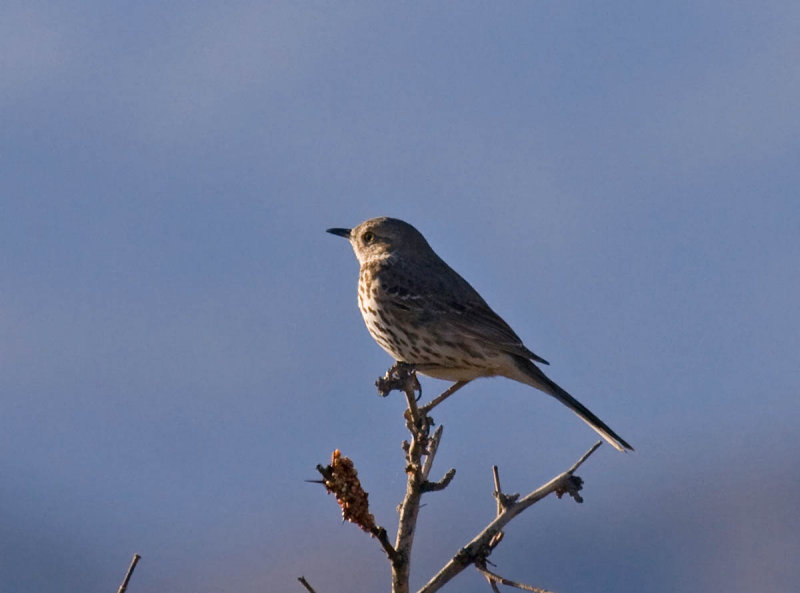
Sage Thrasher
Sage Thrasher. Blair Valley, California. March 18, 2018.
Avicaching is fun! This particular project contributes to knowledge of birds in remote desert areas that may be impacted by solar farms. In this case, Sage Thrashers migrate through this area in large numbers. And who knows, perhaps Le Conte's Thrashers may be resident here. Further north, in San Bernardino County, breeding Bendire's Thrashers may be impacted. Other Avicaching points continue in the Mojave Desert to Death Valley and Las Vegas, Nevada.

Birdless. That's the first impression one has of Blair Valley survey points. The low spot on the valley is a dry lake bed. Last year spring rains brought a "Super-Bloom" to the desert. Very little moisture this winter, so just year-old dry grass in the lake bottom. At the edges, sparse well-spaced creosote bushes begin. Then some Gander's cholla and Mojave yucca (like smaller Joshua trees). That's the vegetation of one of the survey sites.

Sage Thrasher

But scanning across the creosote I spy several solitary robin-like birds hopping on the ground--Sage Thrashers! And they are more common than one would think. After I entered 2 birds on the checklist the rarity flag in eBird popped up. I quickly reached 9 birds, and finally 12 birds after walking a couple hundred feet out and then returned to the car in a large loop around the survey point. That surpasses the total number of Sage Thrashers I've seen total in the Anza-Borrego desert the past 3 years!

Sage Thrasher

Driving out past the camping area there were several Mourning Doves, a Verdin called, and several Black-throated Sparrows flitted about. There were certainly birds here, especially up next to the rocky hill, but it requires work to find them.

Sage Thrasher

The second survey point was closer to the highway. There was more vegetation here. Some gravelly areas included cholla, barrel and hedgehog cacti, California juniper, and desert agave. As the gravel gave way to sand, it was again creosote, cholla, and Mojave yucca.

Blair Valley

The gravel/cactus area seemed good for Black-throated Sparrows. But none revealed themselves. I walked a couple hundred feet without encountering any sign of any birds. I was really thinking I was going to submit a 20-minute checklist with no birds recorded! Then I heard a very distant raven. Looping around back to the car I heard the chugging of a far-off Cactus Wren. When I reached the car I heard the caroling melody of a singing Sage Thrasher back where I had been. Three species, three total individuals, none seen. Then two ravens flew up right over me!

First eBird checklist.

Second eBird checklist.

Even though birds were sparse, I enjoyed visiting a new area for me and contributing to the knowledge of birds in a very under-birded location. I hope to get out there again a time or two this spring. I would really enjoy it if there were more avicaching projects to participate in. Perhaps it could be done as a follow-up to the bird atlas project that was done about 20 years ago in San Diego County. I know I really enjoyed the Oregon Breeding Bird Atlas project done about the same time. Fun!
Thursday, January 5, 2017

Oh-fer: A summary of my county bird listing in 2016

It has been my goal to see over 300 species in a year in San Diego County for each of the past 3 years. I'm not trying overly hard; I'm not chasing any but the most nearby rarities. But still, others are finding over 350 species in a year. And I'm finding the regular residents and migrants and "regular rarities." I'm just not driving 45 miles to view one bird at one location when a rare bird pops up. So occasionally I make a day-long trip to see a bunch of the long-staying rarities on a circuit. Sometimes it works; other times not so much.

On November 26, 2016 I posted this message on the San Diego Region Birding list.

It sums up my rare bird chasing for 2016.

Subject: Oh-fer

Spent the whole day chasing this week's reported rarities.
Started at the Bird & Butterfly Garden where I did NOT see the Gray Flycatcher, Black-and-white Warbler, or Blackburnian Warbler.
Then over to the Sunset ball fields where I proceeded NOT to see a Lapland Longspur or Red-throated Pipit.
Down the road at Nestor Park I easily found the shady characters, but was UNABLE to find the Pine Warbler.
After a nice lunch I drove to the San Diego River mouth where there was NO sign of Burrowing Owl, Palm Warbler, Eurasian Wigeon, or Greater Scaup.
Finally, as the sun set, there was NO Franklin's Gull at Mission Bay.
My luck is 100%.
A wonderful and very typical birding day.

Greg Gillson
Escondido

Is it any wonder I don't like chasing other people's rare birds, but would rather find my own? But like my favorite sports team, I'm always enthused as the new season (or year) starts with encouragement that is somehow crushed as the year nears its end.

So I'm both excited and depressed that I started 2017 with these two birds on a brief stop after the January 1 pelagic trip...

Eurasian Wigeon
Eurasian Wigeon. STILL at San Diego River mouth, January 1, 2017. Greg Gillson.
Burrowing Owl
Mocking my 2016 listing prowess,.. and preparing me for 2017's eventual listing disappointment, this Burrowing Owl is STILL right out in the open and STILL at San Diego River mouth, January 1, 2017. Greg Gillson.
And on January 2nd, while outside at work, a rare Plumbeous Vireo inexplicably landed in a tree right beside me at eye level!

This great start to my year's bird list means only one thing about 2017... crushing disappointment lies ahead.

Thursday, April 14, 2016

Black Canyon Bridge

I recently posted photos of a Brewer's Sparrow and a Black-chinned Sparrow on Black Canyon Road. These add to the little trip report/site guide last spring of Birds of Black Canyon Road, Ramona.

From Hwy 78 east out of Ramona, turn north on Magnolia Avenue. After a mile or so this becomes Black Canyon Road. This road is well-maintained gravel, but one-lane wide in places. Heed the signs that say "use horn at one-lane curves.”

The road travels through extensive, but low and sparse south-facing chaparral, climbing gradually. At the low summit, the chaparral becomes denser with more brush and small trees as it descends northward toward the Santa Ysebel Creek below. For passenger vehicles that aren't too low you can pull off the road and park here for decent birding.

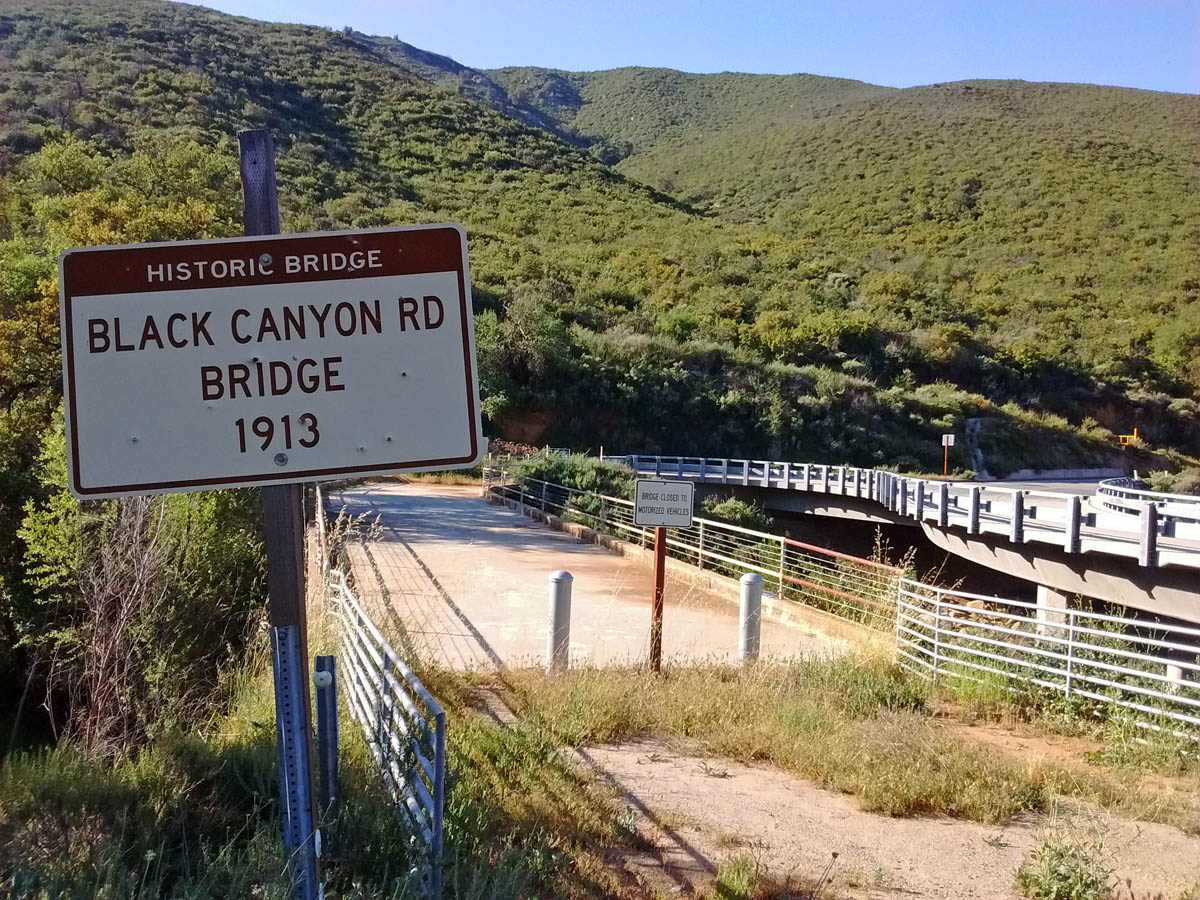
Another mile-and-a-half or more and 7.3 miles from Hwy 78 you reach Black Canyon Bridge. This is great riparian habitat with lots of birds. There are some pull-offs to park and bird this area before crossing over the bridge. A new bridge in 2010 replaced the structurally deficient 1913 bridge at the intersection of Black Canyon Rd and Sutherlin Dam Rd.

Black Canyon Bridge
Black Canyon Bridge, old and new.
I don't know much about historic bridges. This one is built on the Thomas Three-Hinge System as designed by William Thomas. I think I read that the largest span is 60 feet and the whole bridge is about 150 feet in length. But walking over this bridge gives good birding views at tree-top level for those trees growing 30 feet below in the creek bottom. And for at least the past two years, and perhaps the past 103 years, Canyon Wrens have nested under this bridge.

Canyon Wren nesting under the Black Canyon Bridge
Canyon Wren carrying food under the Black Canyon Bridge, Ramona, California. March 27, 2016. Greg Gillson.
Just across the bridge is a rough road down to the former Black Canyon Campground, Cleveland National Forest. The campground was closed about 30 years ago, evidently to curb the wild parties and increasing crime. The campground is right on the Santa Ysabel Creek and there are supposed to be waterfalls. I think I'll walk down there the next time I visit.

On my previous visit I passed by the bridge (without crossing over it) and took the Sutherlin Dam Road a couple of miles to Lake Sutherlin and back into Ramona. On this most recent visit I drove north across the new bridge and headed up past the Mesa Grande Reservation and came out at Lake Henshaw--a longer, but enjoyable ride.

Wednesday, December 9, 2015

BirdLog is dead! Long live eBird Mobile!

eBird Mobile for Android just came out, joining eBird Mobile for iOS that has been available for about 5 months. These Apps replace BirdLog.
eBird Mobile Review

eBird is a real-time online checklist program by the Cornell Lab of Ornithology and the National Audubon Society. It was first introduced in 2002. Frankly, I wasn't enamored with it until 2010-2011 when useful tools showed up that allowed anyone to view recent bird sightings maps and frequency and abundance bar charts anywhere in the world. Other enhancements that followed included selectable alerts and photos embedded in the checklists. In December 2011 I called eBird "an absolutely indispensable real time world-wide bird status and distribution tool." eBird can even make you a better birder.

The power of eBird was greatly enhanced in 2012 by the introduction of BirdLog by BirdsEye Nature Apps. I called BirdLog the "'killer app' for eBirders!" Now one could submit bird sightings directly from the field on their smart phone! No more transcribing field notes into eBird on your computer at the end of the day. It is so easy that you just start a new checklist for each new location during your birding trip and keep track of the birds as you see them. In July 2013 I wrote an eBird best practices post on using BirdLog. These best practices apply equally to the new eBird Mobile.

You know what's even better? eBird Mobile is 1) FREE! and 2) one App covers the whole world! Previously, BirdLog for each region (North America, Mexico and Central America, Australia and New Zealand, etc.) was priced at $10 each, while a world App was $20. eBird Mobile is now available in 5 languages.

In February 2011 I wrote: "Just as binoculars and field guide has defined a birder for the past 75 years, I believe eBird will define what it means to be a birder in the coming decades."  I believe this to be more true than ever, and now with eBird Mobile it is free and so much easier!

Many thanks go to the developers of BirdLog for making field data entry into eBird so wonderfully easy. Now that this functionality is moved directly to the eBird team, I expect even smoother integration and regular enhancements. Well done to all involved! Congratulations.

Tuesday, October 20, 2015

Two years birding in San Diego County


The end of September marked 2 years living in San Diego County. The Management job for the mobile home park Marlene and I work at will be 2 years at the end of November. It seems to be going well now, even if so difficult at first--but that's work, right? We miss all of our friends in Oregon, but have made many new friends locally. Never before in history has it been so easy to keep in contact with friends throughout the earth. Still, they are missed--even if there are irregular phone calls, emails, text messages, Instagram photos shared, online games of Words with Friends, or blog postings.

The last few birds I've added to my County List in San Diego include Least Bittern, Hermit Warbler, and Yellow-throated Vireo (lifer) in August, Red-masked Parakeet (non-countable on ABA list) in September, and Green-tailed Towhee and Snowy Plover in October, so far. That brings me up to 311 species for the county total, 266 this year. Last year I found 270 species for the entire year, so this year seems like it could be more. I didn't plan on being out of commission, birding-wise, in August and September with shoulder surgery, but that is life.

For comparison, Nancy Christensen has 325 species in the county this year. The record was in 2013 when Barbara Carlson recorded an amazing 387 species in a single year. Over 500 species have occurred in the county, though just over 400 is typical for any one year.

Now that Snowy Plover is no longer #1 on my 'missing species list' ("nemesis bird") the new contenders for "what, you haven't you seen them yet?" are Red-crowned Parrot and Common Poorwill.

Sunday, October 18, 2015

Black and Least Storm-Petrels on 30 Mile Bank

Storm-petrels are tiny little seabirds. They flit across the waves staying far away from land where they may fall prey to larger gulls. They search for food--crustaceans barely larger than microscopic that float along the ocean's currents. These they pick off the ocean's surface while hovering. While many storm-petrels are solitary, some form dense flocks.

Most storm-petrels breed on isolated islands, digging their nest burrows under sod. To avoid predators they only come ashore at night. No bright colors or distinctive patterns are necessary to attract mates in such situations--most species are black or brown, some with pale bellies. Already hard to identify because they look similar, they also tend to flee away from boats, and are hard to observe.

Location of storm-petrel flock west of San Diego
About 30 miles west of La Jolla an autumn flock of storm-petrels gather each year. Those bird watchers who keep track of birds by county find a slight vexation with the storm-petrel flock. You see, the seabird watching trip departs from San Diego and spends all its time in San Diego County waters. However, the storm-petrel flock is often just a mile closer to San Clemente Island (Los Angeles County) than to La Jolla (San Diego County). Thus, according to the "nearest point of land" rule, these storm-petrels are frustratingly in Los Angeles County and much less frequent in San Diego County waters. Silly, I know, even to many birders. But, for instance, I've seen 311 bird species in San Diego County and only 76 avian species in Los Angeles County. These San Diego pelagic trips often venture across the imaginary line into Los Angeles County to find the storm-petrel flock.

There's the flock! About 3000 birds.
We can only approach to within about 500 feet before the birds pick up and fly away to resettle a bit farther off. So we approach as near as we dare and wait for individuals to fly closer. We see that about 20% of the flock is made of the larger Black Storm-Petrels, the rest are the much smaller Least Storm-Petrels.

Black Storm-Petrel
Black Storm-Petrels
Besides being larger and blacker, Black Storm-Petrels fly with leisurely deep wing strokes (they remind me of Black Terns in flight). Photos show wings raised and lowered quite far. They also show a longer wing held forward at the wrist and an obvious pale carpal bar (wrist and upper arm) on the upper wing. The tail is forked and fairly long.

Black Storm-Petrel
Black Storm-Petrel. 30 miles East of San Clemente Island, Los Angeles Co., California. October 11, 2015. Greg Gillson.
The small Least Storm-Petrels are paler brown. The wings are shorter, straighter and flapped deeply but quickly and stiffly ("bat-like"). They almost appear tailless.

Least Storm-Petrel
Least Storm-Petrel. 30 miles East of San Clemente Island, Los Angeles Co., California. October 11, 2015. Greg Gillson.
We kept a lookout for other species, especially any with white rumps (Leach's Storm-Petrels and rare Wilson's Storm-Petrels) but we saw none. One grayish Ashy Storm-Petrel was spotted by a couple of people as it flew with rapid shallow wing strokes in a straight line but twisty side-to-side flight, very long tail, and whitish under wing linings. But I missed it this time among the swarm.

Saturday, August 22, 2015

On taking field notes

Guess what's in this blue tub?

blue tub

Van Remsen in American Birds September 1977 wrote an article that greatly influenced my birding: "On Taking Field Notes." Following this article I changed the way I kept track of birds I saw. In fact, I kept field notes based on this article faithfully for 28 years, until 1996. After that my field notes kind of sputtered and were irreglular until 2006. Then I started using BirdNotes online for some of my birding trip lists. 

tub full of field notes
A tub full of Greg's bird field notes dated from 1972 to 2006.
In 2010 I started using eBird and became a strong advocate (one might even say "evangelist") of this great program (click here for "What is eBird?" that I wrote in 2010). This real-time online checklist program allows me to take field notes in the way that Remsen recommended. Locations can be mapped precisely. Time and distance are recorded. I can note mere presence or exactly count numbers. Rare birds are flagged (and vetted) so that I must write a description before they'll be accepted into the database. One of the problems of my paper field notes is that I would underline rare birds on my day's list, but then not say anything more about them. Thus, years later, even I can't vouch for some of the sightings of rare birds that I listed but did not describe. I can even add photos to my lists.
birding field note books

The reason I bring this all up (again)? Just this week I finished a 5 year project of entering all those 37 years of my bird notes (1972-2010) into eBird. Yes, every bird that I've ever seen for which I have notes that contain exact locations and dates, are now in eBird. In total, including these old notes and bird lists directly into eBird from 2010 to date, they number over 7000 checklists. 4000 of those lists are complete checklists--every bird I saw at a particular location and date. All my notes, all those valuable data, all that hard work, is preserved and publicly available right now as long as eBird and National Audubon Society and the Internet exist. That's a lot better than sitting unused in a blue tub in my closet.

I think Van Remsen would be pleased.

Sunday, July 12, 2015

Book Review: Birding by Impression

Birding by Impression: A different approach to knowing and identifying birds. Kevin T. Karlson and Dale Rosselet. Houghton Mifflin Harcourt. Boston/New York. 2015. Hardcover. 286 pages.

There are many field usable clues to a bird's identity other than the patternistic "field marks" put forward by Roger Tory Peterson in 1934. Thus, this new entry in the Peterson Field Guide series, Birding by Impression tackles bird identification using size, shape, behavior, and then adding plumage patterns and general colors, as well has habitat and finally vocalizations.

Rather than covering all North American species, this book covers groups of bird orders, up to perching birds, then covers the various family groups in the passerine order. In each of these chapters some specific identification problem is solved using Birding by Impression (BBI).

One fun learning tool is the inclusion of 219 photo quizzes. Wonderful!

Having trouble separating juvenile Black-bellied Plover, American Golden-Plover and Pacific Golden-Plover? It's there on page 96-98, following the general Plovers information. Do you understand the concept? Turn to the appendix for the photo quiz answer to Figure 89.

This is an informative book. And if one really puts in the study, there is much to be learned here. For instance, I learned that the crown of Rusty Blackbird is more rounded than Brewer's Blackbird.

Vocalizations are first on my list of how I both notice and then identify birds. However, it is included last in this book. The statement that "duck vocalizations rarely play a role in the ID process" is simply not true for puddle ducks. Mallard, gadwall, pintail, wigeon, shoveler, Green-winged Teal, Wood Duck all have unique calls that give them away as they fly overhead in the morning fog or sound off from their concealment in the marsh. Visit any hunting store and find duck calls for each of these.

Flying is the defining means of locomotion for most birds. We see more birds in flight than sitting still. Yet many birders have not been taught to identify birds in flight. So the nearly complete lack of flight style information (except for storm-petrels) was just sad. The description of the difference between crows and ravens in flight was right on. But there was really nothing on the differences between swallows in flight that help make their high-in-the-sky animated silhouettes instantly recognizable to species. And nothing on the distinctive flight styles of the different sparrows as they flush away from you off the road edge. Not only were descriptions of flight style lacking, but there were no instructions or terminology. It's as if the authors think that birds cannot be identified in flight.

In many ways, this book is preceded by the works of Kaufman's Field Guide to Advanced Birding (2011) (size and shape, habitat, behavior), Dunne's Essential Field Guide Companion (2006) (habitat, behavior, flight, vocalizations), and Alderfer and Dunn's Birding Essentials (2007) (size, structure, shape, plumage pattern and color, behavior, flight, typical movements, feeding behavior, voice).

The Stokes Field Guide to the Birds of North America (2010) uses to good effect shape perched and shape in flight, as well as plumage, habitat, and voice. This under-appreciated work gives one a good idea of what is possible in a field guide that uses Birding by Impression in combination with traditional plumage descriptions.


I have thought quite a bit about the technique or methodology that I personally use to identify birds. First and foremost I locate and identify more than half the birds I encounter by voice (exceptions being seabirds, gulls, diving ducks, and distant shorebirds and raptors) Then I observe shape. Thirdly, I use flight style to identify flying birds before using any plumage characters. I guess its time to organize all my notes and finally create that "how to" manual for identifying birds in flight.

Birding by ImpressionGreg's methodology
1SizeVocalizations and other sounds
2ShapeShape
3BehaviorFlight style
4Plumage patterns and colorsSize
5HabitatBehavior
6VocalizationsHabitat
7Plumage patterns and colors
8Status and distribution

Sunday, May 31, 2015

Common Gallinule at San Luis Rey River Mouth

Les and Marlowe visited us for lunch last weekend on their road trip from Oregon. Afterwards we made an impromptu trip to the beach at the San Luis Rey River Mouth in Oceanside. While Marlene and Sabrina took Daphne to play on the nearby beach, Marlowe, Les, and I walked around the river mouth and Marlowe and I photographed some of the birds.

Marlowe just started birding a couple of years ago. Her life list was sitting at 199 after I showed her where to find a Hooded Oriole and Cassin's Kingbird in San Marcos. She was about to add several more species she had never seen before.

Marlowe's photos can be found on her blog: Marlowe's Bird Lists and Photos: "Trip to Southern California."

We spotted a duck-like bird with a red bill swimming in the river. Marlowe wasn't sure what it was, and I didn't tell her.

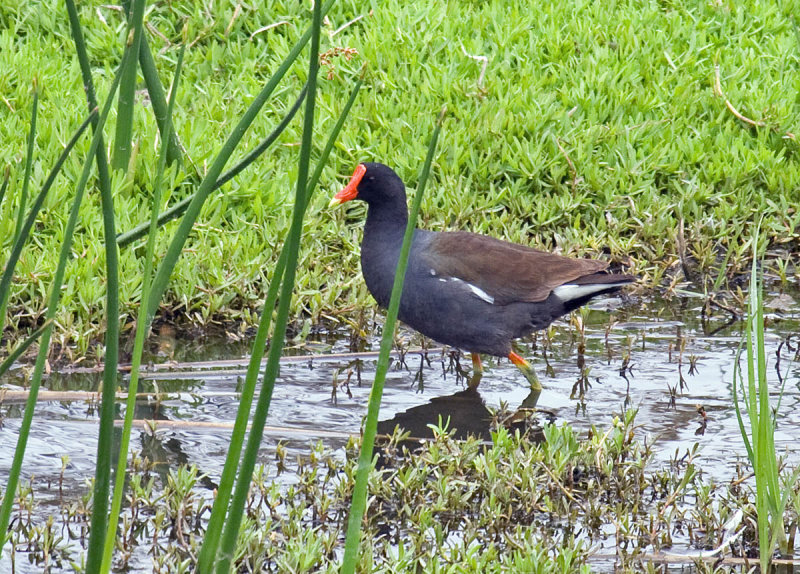
Common Gallinule
"What in the world could THAT be?"
I had her pay special attention to the shape of the bill and the feet. Hmm... it had a pointed bill that extended up the forehead. And look at those long toes!

Common Gallinule

If it doesn't have a flat bill like a duck, and doesn't have webbed feet like a duck, it must not be a duck! Marlowe then decided it might be in the rail family. But I didn't help her any more than that. The ID would be her homework. I do that sometimes.

Common Gallinule

This wasn't her only new bird. But I bet she remembers this first sighting for many years.

Common Gallinule
Common Gallinule. Oceanside, California. May 24, 2015. Greg Gillson.

Sunday, January 11, 2015

New Year's Day Pelagic Trip

Point Loma
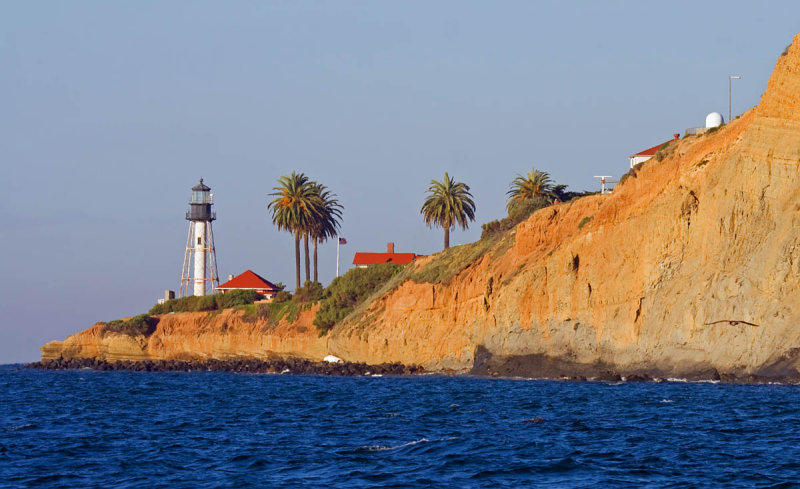
Point Loma, San Diego, California. January 1, 2015. Greg Gillson.
The San Diego Field Ornithologists have been holding annual January 1 pelagic trips for many years. This trip went out over the Nine Mile Bank and back. [Trip report]

Next trips are April 25, May 16, and June 14. [Schedule on SoCalBirding.com]
These 10 and 12 hour trips are certainly the least expensive pelagic trips in North America.

Highlights from January 1 included about 10 Ancient Murrelets.

Ancient Murrelet
Ancient Murrelet
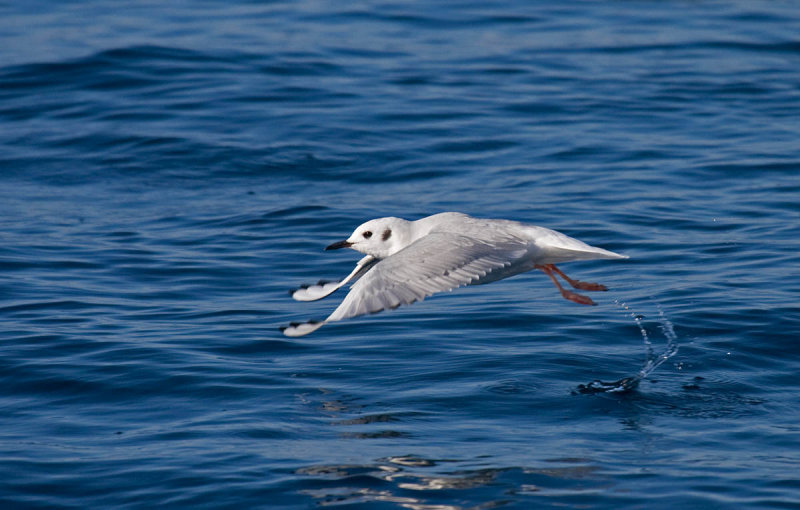
Bonaparte's Gull
Bonaparte's Gull
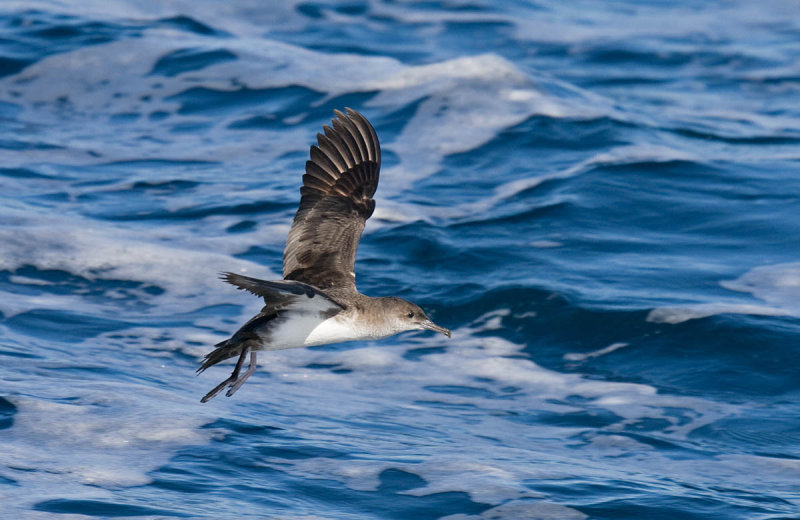
Black-vented Shearwater
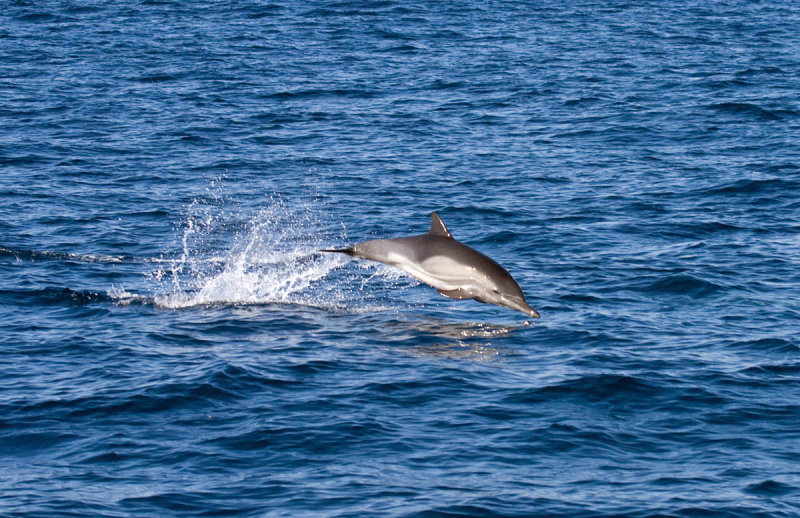
Common Dolphin
Common Dolphin
Brown Booby
Brown Booby
Cassin's Auklet
Cassin's Auklet
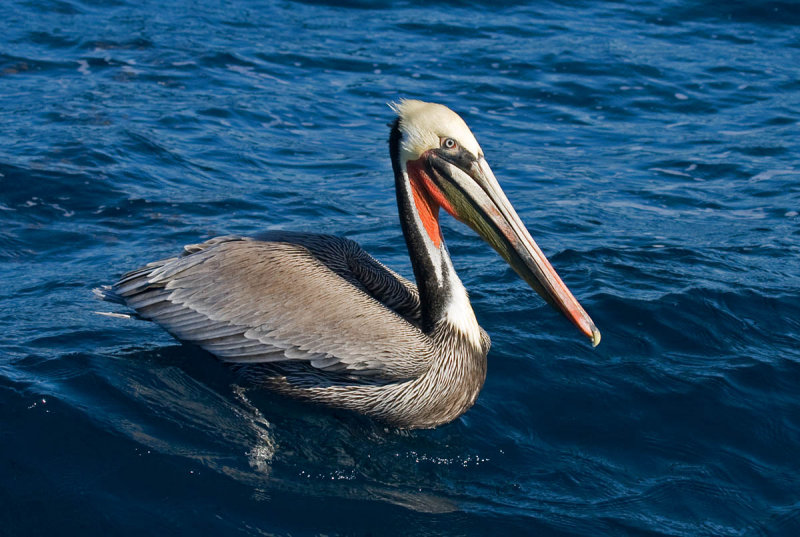
Brown Pelican
Brown Pelican
Pomarine Jaeger
Pomarine Jaeger
One interesting bird was this partially leucistic Black-vented Shearwater. I had heard about such birds, but I believe this is the first shearwater that I've seen like this.

leucistic Black-vented Shearwater
Leucistic Black-vented Shearwater. Off San Diego, California. January 1, 2015. Greg Gillson.

Saturday, January 10, 2015

Sage Thrasher at Borrego Springs

Sage Thrasher
Sage Thrasher. Borrego Springs, California. December 26, 2014. Greg Gillson.
While searching unsuccessfully (again) for Crissal Thrashers in the mesquite trees near the Borrego Springs waste treatment plant, I spotted this Sage Thrasher. This species can be found from fall through spring here in the Anza-Borrego Desert, but most frequently are seen in March and early April on their northward migration.

Sage Thrasher
The rather short, straight bill (for a thrasher), yellow eyes, and the streaked breast makes identification of this species easy, compared to some of the other desert thrashers.

Unfortunately, I spent most of my early morning here trying to keep out of shotgun range from a couple of hunters chasing quail around this area of only about 10 acres. When they'd go around the waste ponds one way, I'd go the other way. I mean, I had traveled 80 miles the previous day. Marlene and I spent the night in a motel. I arose very early to get here at dawn to search for thrashers. I didn't want to go elsewhere, as this was my one chance during this trip.

It was 29 degrees at dawn, but the sun warmed me. By 10 o'clock the temperature would peak for the day at about 65 degrees. And there were good birds here, including a few Sagebrush/Bell's Sparrows, a calling Virginia's Rail in the ponds, and many, many Phainopeplas.

Sage Thrasher

Monday, January 5, 2015

Mid-December birding at Discovery Lake and Lake Hodges

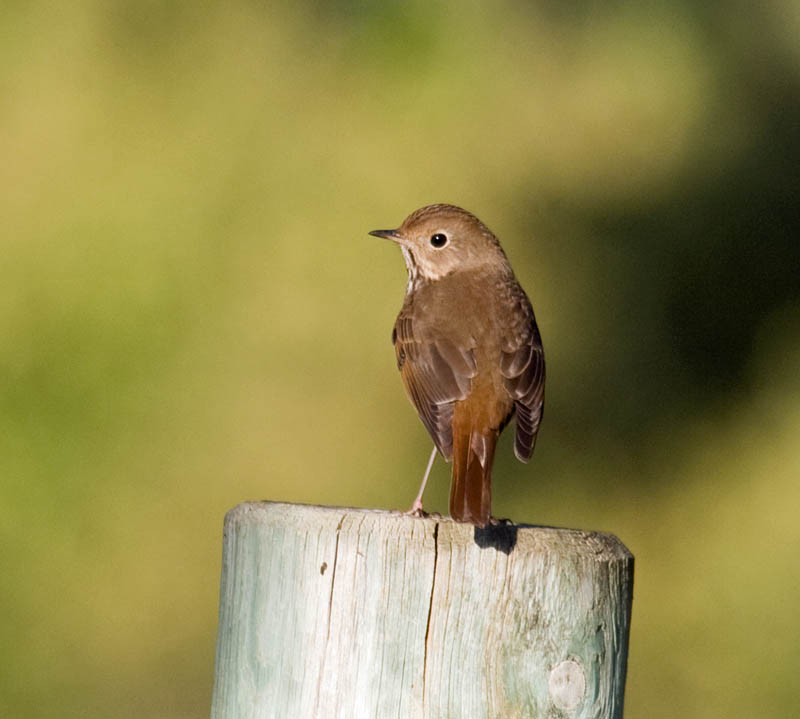
Hermit Thrush
Hermit Thrush. Discovery Lake, San Marcos, California. December 14, 2014. Greg Gillson.
Some of my birding days this summer and fall resulted in very few photos. However, that wasn't the case in December. I am now very backed up. Hmm... that doesn't sound quite right. I have many photos I wish to show and am getting behind in doing so. There, that's better. Maybe.

Back in mid-December I took a day to visit a couple of local lakes. First I went to Discovery Lake Park in San Marcos. It is a small tree-lined lake with paved path around it. I thought arriving at dawn on a brisk winter morning I would have the place to myself. Half-a-hundred hikers, joggers, baby stroller-pushers, and dog-walkers didn't agree with my logic.

After walking a mile loop around the lake I continued on to Lake Hodges a couple of miles south of San Marcos and Escondido. This area is more rugged than Discovery Lake, but there were still many hikers and mountain bikers enjoying the increasingly pleasant temperatures around this large reservoir.

I've already discussed some of the individual birds I saw this day, including...

Photogenic California Thrashers at Lake Hodges and Discovery Lake
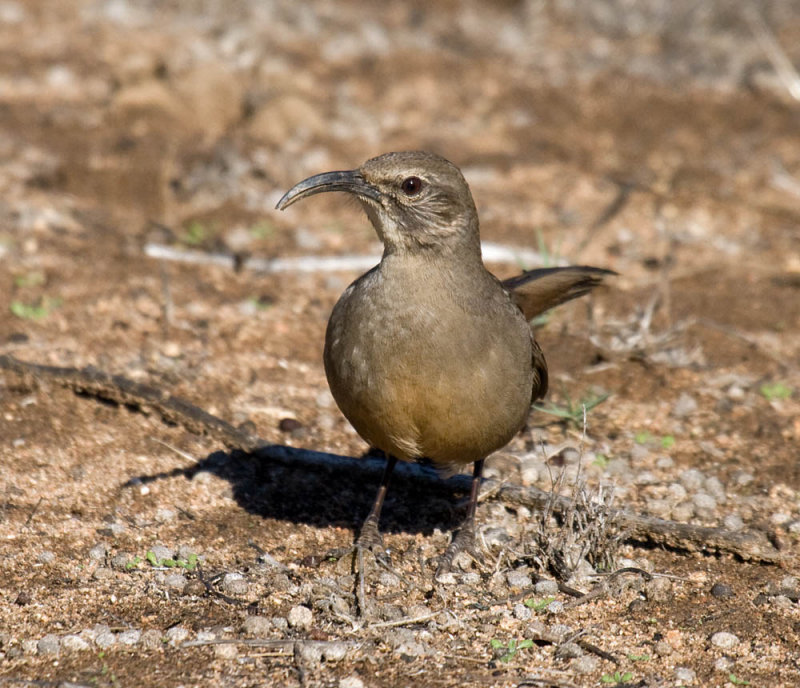
California Thrasher

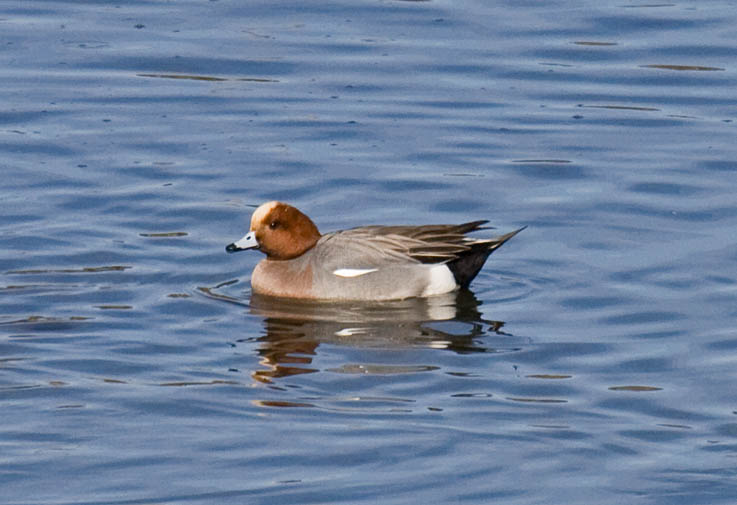
A somewhat rare Eurasian Wigeon at Lake Hodges
Eurasian Wigeon

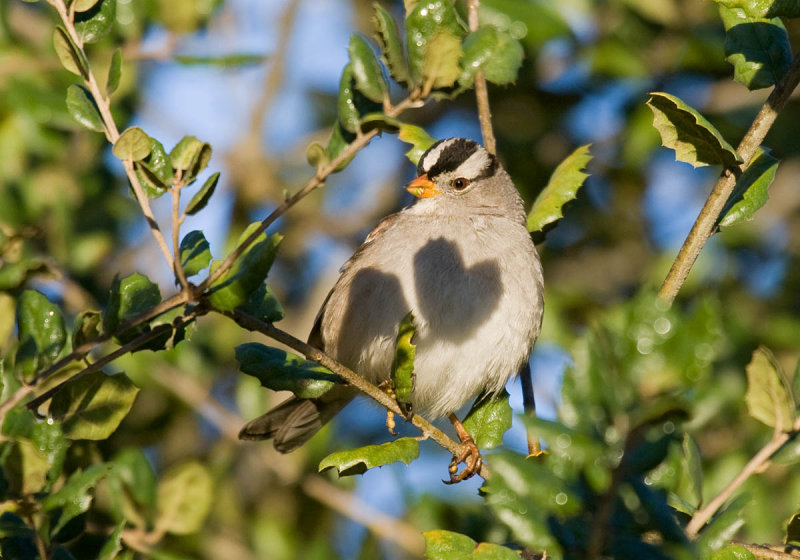
Some Gambel's White-crowned Sparrows at Discovery Lake
White-crowned Sparrow

Now I present additional birds seen that day.

At Discovery Lake several migrant Hermit Thrushes were hiding in the dense foliage, but one came out to perch on the fence rail to allow a photo showing its tell-tale reddish rump and tail (opening photo, all the way to the top).

Other skulkers included...
Wrentit
Wrentit

Song Sparrow
Song Sparrow
However, some birds were strikingly obvious...
Anna's Hummingbird
Anna's Hummingbird
Continuing on, then, over at Lake Hodges I found many more birds...
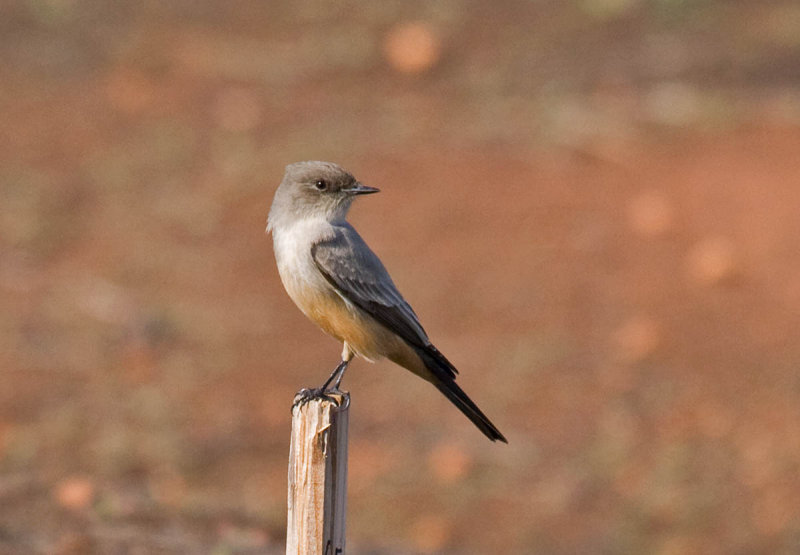
Say's Phoebe
Say's Phoebe

Blue-gray Gnatcatcher
White-tailed Kite
White-tailed Kite
Cassin's Kingbird
Cassin's Kingbird
Plus, I took some scenic photos that I will share sometime in the next months as part of a site guide to Lake Hodges. So you have that to look forward to (this is called a teaser!).

And that catches me up to mid-December's photos and I can now move on to more late December and January photos!

Wednesday, December 17, 2014

eBird: Target Species

I don't know when it appeared, but a new function on eBird, "Target Species," has some really exciting applications.

If you don't know about eBird, I wrote 20 posts about eBird, and how to get the most out of it, from 2010-2012 on my (now inactive) Pacific NW Birder blog. Suffice it to say, I said, without hyperbole: "eBird is an absolutely indispensable real time world-wide bird status and distribution tool."

I've been living in San Diego County, now, for just over a year. Here's a question I want to know: What species that I haven't seen yet are the easiest to find in the county? Even more practical: What birds that I haven't seen yet in the county are the most likely for me to find next month?

Those questions are answered with the Target Species function in eBird. What did I learn?

The top 5 reported birds in the county, for the entire year, that I haven't seen yet are these:
1. Snowy Plover
2. Lawrence's Goldfinch
3. Red-crowned Parrot
4. Hermit Warbler
5. Canyon Wren

Well, it's winter now, so I'm not going to see some of these birds as easily now as later in the year. So, how about I use this eBird function to plan birding trips next month to look for some of these "easy" ones? What are the top 5 reported birds in January that I have yet to see in San Diego County?

1. Snowy Plover
2. Reddish Egret
3. Green-tailed Towhee
4. Red-crowned Parrot
5. Virginia Rail

Now, I have a reasonable list of target birds to look for in the next month or so. I can use eBird Needs Alert and the San Diego Region Birding email list to learn of recent reports of these birds. I can also use the eBird map function to map all previous reports and look at only winter.

Sunday, December 14, 2014

Birding Site Guide: Point La Jolla seawatch

Point La Jolla, California. Looking west-southwest. December 7, 2014. Greg Gillson.
In the northern part of the metropolis of San Diego is the affluent seaside neighborhood of La Jolla. It had the highest home prices in the nation in 2008 and 2009, where a standardized 4-bedroom home would sell for over 2 million dollars. This hilly community overlooks the ocean and rocky cliffs and tide pools. The average daytime temperature is 70.5 degrees Fahrenheit (Wikipedia).

This is a popular tourist destination with a sidewalk on the bluffs along a half-mile or so of the coastline, with two small sand beaches and some tide pools.


Scripps Park is a popular grassy area to picnic (or have your wedding). It also serves as the base for watching seabirds from shore on the west edge of La Jolla Cove ("A" in satellite photo below). The far left sandy beach in the photo ("B" below) is the Children's Pool near Seal Rock. It was taken over by Harbor Seals and they now "own" the beach, and people are not allowed. There is a walkway here down to the tide pools.


Getting there: From I-5 Northbound out of downtown San Diego take the Torrey Pines Exit. Or, from Hwy 52 go west to La Jolla Parkway, which becomes Torrey Pines Rd. Then head southwest on Torrey Pines Rd, right on Prospect, right on Coast Blvd to Scripps Park, La Jolla Cove, and Childrens Pool on Coast Blvd.  Parking: Very limited FREE street parking along Coast Blvd. If you arrive at sunrise, especially on a weekday, you shouldn't have trouble finding a close spot. Hours: Seabirds are best from dawn to as late as 9:00 am. After that you may find rocky-type shorebirds, gulls, cormorants, crowds, and not much parking. Map navigation: Scripps Park is 1133 Coast Blvd, La Jolla, California. Children's Pool is 303 Coast Blvd, La Jolla, California.

Where to bird: The main seabird watching spot is the farthest north portion of Point La Jolla on the sidewalk adjacent to the grassy Scripps Park area ("A" in satellite photo above). If you go at dawn, chances are good that Stan Walen--as he has for over a quarter century--will be sitting on the bench there scoping out seabirds that fly west past the Point (see photo below).

You can scan the open ocean for seabirds from near the Children's Pool ("B" in photo above) if winds blowing offshore and no birds are near or inside Point La Jolla. 

Notes on seabirding: This is a good place for seabirds during late fall migration and winter [November-December seem especially good]. You MUST be there at dawn. You also MUST watch birds primarily with a spotting scope.

Look again at the two accompanying photos. The large research boat in the photo below is about 1 and 1/2 miles north. One Brown Booby flew just in front of that boat and was the closest booby of the 8 seen that day. Loons and other birds flew much nearer. Gary Nunn's camera (on tripod with him below) has a 500mm lens and a 2x converter, giving his camera the equivalent of about 25x magnification. My scope there, left of Gary, is 20-60x zoom. Most of the time I set it about 40x and looked 2-3 miles west in the direction it is facing below.

Gary Nunn (standing, left) Stan Walens (sitting on bench, right) at Point La Jolla. Looking north.
Now go back to the very top photo. This is the view looking westward. The smooth water just about to the horizon are the kelp patties. I don't know if you can make it out, but just a bit right of center, 3 miles away at the horizon, is another smaller white boat, just beyond the kelp paddies. That is where many of the seabirds (boobies, shearwaters, and auklets) were flying by. With 8x binoculars I could sometimes make out the white headed and two-toned brown wings of adult Brown Pelicans at that distance. But I couldn't identify any other birds at that distance with just binoculars (except a couple of white egrets standing on the kelp).

Seawatching is often best during nasty weather with onshore winds blowing in your face, and blowing the birds closer to shore. A strong offshore breeze will have no nearshore birds. Fog is just as bad. Look for birds with naked eye or binoculars and switch to your scope when you see them.

To summarize
1. Dawn
2. Spotting scope
3. Patience and Practice

[For a post I wrote several years ago on this same topic, but from a different location, see Virtual Seawatch at Boiler Bay, Oregon.]