I haven't posted anything new for several months. Some of you have asked me about it.
Well, in July I was working on art for a post I was writing on the at-sea identification of California's dark-rumped storm-petrels.
Then I watched a YouTube video on writing the perfect blog post in an hour. That led down a rabbit hole (I didn't realize until just now this idiom was in reference to Alice In Wonderland... oh, oh, distracted again) to writing blog posts for niche websites and earning income. Wait! I could write blog post and earn income? I've been writing blogs for over a dozen years and not getting that many readers. This niche website idea was talking about each web post being read by 1000 people every month! Most of my articles rarely reach 100 views, total in 5 or more years!
Oh, you're supposed to write long-content blog posts based on questions people ask Google? Not on what I think people should know about? Thousands of people monthly aren't searching Google for dark-rumped storm-petrel identification off California? Well, that might explain why most of my posts have very few pageviews!
My most popular posts? They're all on backyard birds. My best San Diego site guide posts get 20 to 30 readers per month. My backyard birds of San Diego post gets 350-500 visitors per month.
So I created a new website on backyard birds in the United States following the method developed by the Income School. I am now 6 months in and have written 90 blog posts. I'm on schedule. If all goes according to the typical website using this method, Google should start increasing the ranking of my pages in the next 3 months or so. Yes, it takes at least 9 months for a new website to start being trusted by Google so that it sends organic search traffic to well-written articles.
The good news is that many of my new posts immediately ranked very high on Bing and Yahoo. But very, very few people use Bing and Yahoo compared to Google. Google takes longer, but should be 90% of the total organic search traffic eventually. Once I get significant traffic (30,000 pageviews a month) then it will be worthwhile to monetize with ads. At least, that's the plan.
I've been writing articles on common backyard birds of every state, articles on bird feeders, bird foods, binoculars, and hummingbirds--popular topics.
If you want to see my latest project website it is here.
I expect that my posts to this San Diego blog will continue at a much slower pace, concentrating on adding birding site guides to areas I haven't written about yet.
Good birding!
Greg
Showing posts with label miscellaneous. Show all posts
Sunday, January 19, 2020
Thursday, November 15, 2018
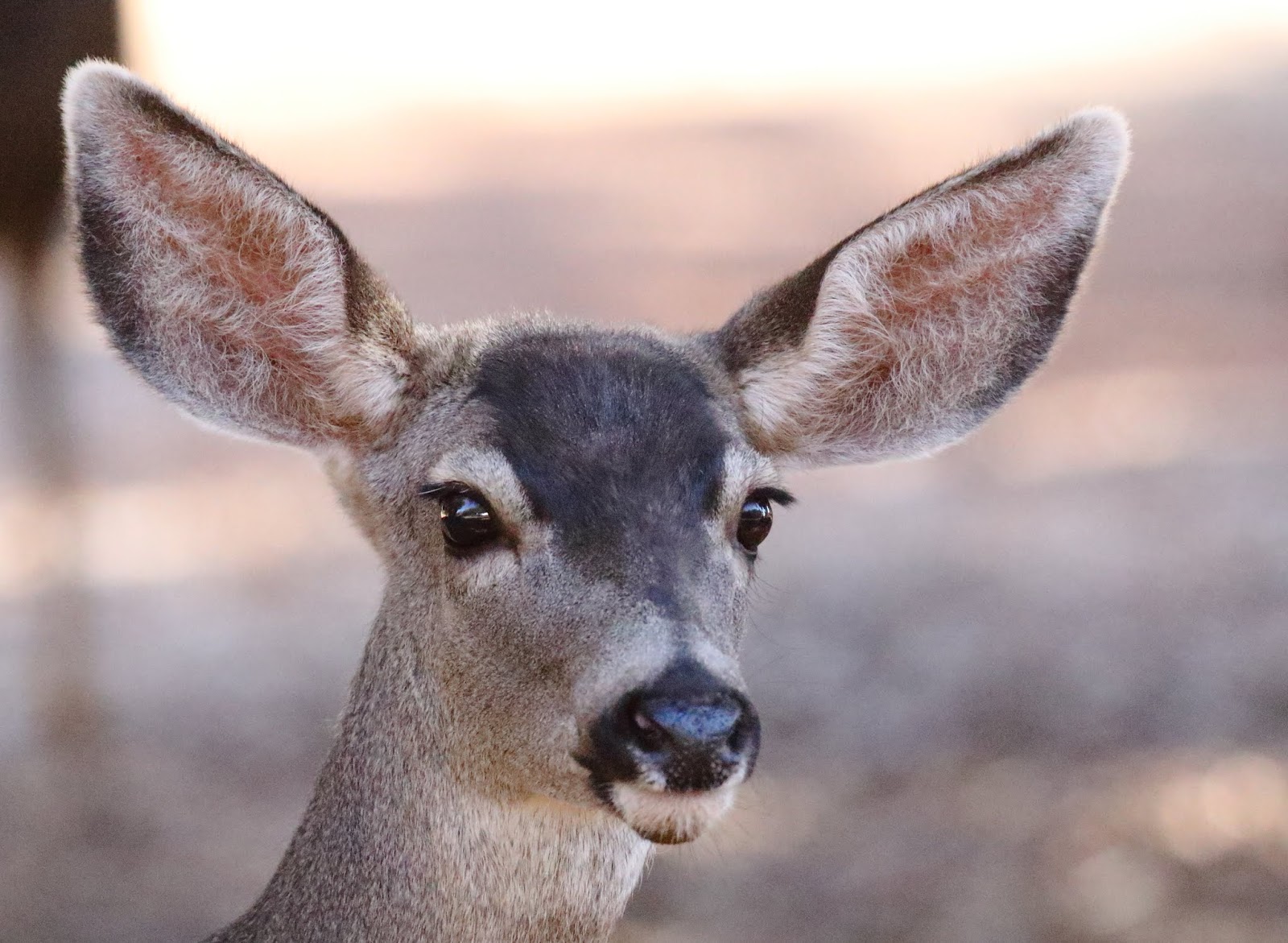
Julian getaway: turkeys and deer photo collection
It was Marlene's and my 40th wedding anniversary. We only had 3 days. Getting "away" sounded better than going to a place with lots of other people. So instead of an expensive stay on a crowded beach, we rented a little cabin in the woods at Julian.
We arrived Saturday afternoon and stayed until noon on Monday. No other people for nearly 48 hours. Pine trees, turkeys, deer, sunsets, oak trees. Silence. Rest. Away.
Here is a collection of photos from our trip. The first 3 were taken on my camera phone, the remainder with my large lens and camera.
As perhaps you can tell from the photos below, there was no time during the weekend when there weren't deer and turkeys in view. In fact, when I walked around the property I invariably had several deer following me around, and the turkeys weren't spooked until I was within 30 feet.
Just what we needed!
We arrived Saturday afternoon and stayed until noon on Monday. No other people for nearly 48 hours. Pine trees, turkeys, deer, sunsets, oak trees. Silence. Rest. Away.
Here is a collection of photos from our trip. The first 3 were taken on my camera phone, the remainder with my large lens and camera.
As perhaps you can tell from the photos below, there was no time during the weekend when there weren't deer and turkeys in view. In fact, when I walked around the property I invariably had several deer following me around, and the turkeys weren't spooked until I was within 30 feet.
Just what we needed!
Wednesday, May 23, 2018
Hydroponics Garden
I got sidetracked on YouTube and found myself curious about hydroponics. Well, I must admit that it wasn't just one sidetracking event.... Eventually, I found that Aerogarden had a great deal on one of their Hydroponics Garden. So I ordered one (Classic 7) with a leaf lettuce kit.
Twenty-four days after planting we had our first harvest with 4 salads with just the outer leaves. Fresh, crisp, sweet, and delicious! The plants remained in the Aerogarden, pruned and ready to keep producing! Another batch of salad should be ready in 5-7 days.
Benefits of hydroponics: Plants grow up to 5 times faster than in soil. Grow indoors. Grow year-round. No sun. No yard. No soil. No weeding. No snails, worms, bugs, gophers, rabbits, or animal contamination (no recall for E. coli). It's the opposite of labor intensive. Perfect for an apartment. Set it up and forget it.
Disadvantages: When this post publishes I'll be in the middle of a 10 day vacation. What will it look like when I return home? Will it have taken over the kitchen? Could be addicting. What happens when I have the whole house full of these? Banks of red grow lights might make the neighbors think I am growing something other than salad.
The smaller Aerogarden model we chose had space for 7 plants and about 3 gallons of water. It comes with an airstone to keep the water aeriated, like a small aquarium. It comes with an array of LEDs--red for leaves, blue for flowers, white for human eyes to see. The arm adjusts up and down and should be kept about 1 inch above the leaves for maximum light intensity and leaf growth.
The Salad Mix Seed Pod Kit contains 7 seed pods with peat moss. They fit in the holes in the top of the Aerogarden with just the bottom of the peat moss reaching into the water. Eventually, the plants grow hundreds of long white root threads down into the water, and many into the moist air between the cover and the water surface. Yes, some roots gather oxygen, rather than water.
A bottle of liquid fertilizer provides the primary three plant nutrients--nitrogen, phosphorus, and potassium. It also contains lesser amounts of the secondary nutrients--calcium and magnesium. Since the lettuce is designed only to last a few weeks/months and be thrown out when it goes to seed, a dozen lesser trace nutrients aren't necessary for long-term plant health. Do-it-yourselfers make their own fertilizers, as it is very inexpensive to make gallons of fertilizer at home, but relatively expensive to ship pre-made liquid fertilizers, which are 99% water. The salad kit comes with a 3 ounce bottle of fertilizer. On set-up, and every two weeks thereafter, you add two small capfuls of fertilizer. Otherwise, just top off the water when needed (there is also a low-water indicator).
I thought the plants grew a bit slowly at first. All seed pods have 5 or more seeds and are guaranteed to sprout. Oh, they did sprout quickly, but looked a bit spindly at first. "Don't be afraid to thin," wasn't very helpful advice. I ended up thinning out all but the healthiest one plant in each pod. I don't know if that was correct or not. The "late bloomer" front and center? I didn't thin that one at all. After adding fertilizer on Day 14, the plants really grew!
At Day 24 the very first leaves were 5-7 inches long and either hanging over the edge and not receiving much light, or were blocking light from leaves below. So it was time to prune. That provided our first salad meals as in the top photo.
This plant should continue to grow and produce for a couple of months. As long as it doesn't bolt--growing a flower stalk--the leaves should remain sweet and keep growing. I'm a bit worried, as I keep house temperatures between 74-77F; lettuce really prefers temperatures under 72F. Higher temperatures may cause the plant to bolt sooner.
Other kits include spices, flowers, and miniature cherry tomatoes. I don't like tomatoes raw--and they take a long time to fruit and ripen. Marlene is sensitive to flower pollen. What is lemongrass or basil, and what would you do with several pounds of it? So, lettuce was an easy choice for our first attempt.
I've noted a few hydroponics stores in the area where I could choose other seeds and buy fertilizer. I could see growing a salsa garden mix--peppers, onions, cilantro, and maybe ONE cherry tomato. Or plant a lettuce pod every 2 weeks to keep fresh lettuce ready for harvest continuously.
Anyway, I don't intend to take this any further than this one small unit. But it's a fun little experiment and certainly an interesting conversational topic!
Twenty-four days after planting we had our first harvest with 4 salads with just the outer leaves. Fresh, crisp, sweet, and delicious! The plants remained in the Aerogarden, pruned and ready to keep producing! Another batch of salad should be ready in 5-7 days.
Benefits of hydroponics: Plants grow up to 5 times faster than in soil. Grow indoors. Grow year-round. No sun. No yard. No soil. No weeding. No snails, worms, bugs, gophers, rabbits, or animal contamination (no recall for E. coli). It's the opposite of labor intensive. Perfect for an apartment. Set it up and forget it.
Disadvantages: When this post publishes I'll be in the middle of a 10 day vacation. What will it look like when I return home? Will it have taken over the kitchen? Could be addicting. What happens when I have the whole house full of these? Banks of red grow lights might make the neighbors think I am growing something other than salad.
![]() |
| A heaping plate of leaf lettuce trimmings. Yum! |
![]() |
| Aerogarden on our kitchen counter showing the LED array |
![]() |
| DAY 1: All planted. Seeds should sprout in 3-11 days. |
![]() |
| DAY 14: One set of seeds was a bit slower than the rest. |
![]() |
| DAY 24: Ready for the first harvest! |
This plant should continue to grow and produce for a couple of months. As long as it doesn't bolt--growing a flower stalk--the leaves should remain sweet and keep growing. I'm a bit worried, as I keep house temperatures between 74-77F; lettuce really prefers temperatures under 72F. Higher temperatures may cause the plant to bolt sooner.
Other kits include spices, flowers, and miniature cherry tomatoes. I don't like tomatoes raw--and they take a long time to fruit and ripen. Marlene is sensitive to flower pollen. What is lemongrass or basil, and what would you do with several pounds of it? So, lettuce was an easy choice for our first attempt.
I've noted a few hydroponics stores in the area where I could choose other seeds and buy fertilizer. I could see growing a salsa garden mix--peppers, onions, cilantro, and maybe ONE cherry tomato. Or plant a lettuce pod every 2 weeks to keep fresh lettuce ready for harvest continuously.
Anyway, I don't intend to take this any further than this one small unit. But it's a fun little experiment and certainly an interesting conversational topic!
Friday, May 18, 2018
My most popular posts
As of May 2018...
As one of my friends once warned me, once you identify a post as your most popular, that designation causes more people to visit to find out why--a self-fulfilling prophecy. The playing field is no longer level. The publication of this post will change what the results would have been going forward without it.
But I present this post primarily for those bloggers and web site owners who may be trying to increase visitors to their site.
The Blogger site has some built-in rudimentary statistics. There are actually two different ways to measure visitors to each page: Landing Pages and Most-Visited Pages. These are unique visitors; repeat visitors are not counted (but if someone uses their PC and later uses their phone, then it would count as 2 visitors).
If Google serves up one of my pages in a response to a user's query (or another web site links to mine), and that user then clicks on the link that takes them to my blog, the first page they land on is the Landing Page. Blogger tracks that. The pages that Google likes on my site are often those that mention popular topics, but with some unique aspect that would take them to my page rather than a more authoritative site like a ".gov" site or Wikipedia, etc. I'll show some examples below.
Once someone lands on my blog and sees the lists of post titles in the sidebar, they may then choose to visit other posts that interest them. This creates another list of most-visited pages.
Blogger counts visits to all pages, but only lists the top 10 landing pages.
So, let's get into it then.
The most popular landing pages are these:
"Birds to know in San Diego: Introduction (Backyard)" is 10 times more popular than any other page on my site. "Backyard birds" is a hugely popular search query on Google. When I combine that with the name of a town in the title, this optimization makes it unique to my blog and makes this page very popular (thus SEO, search engine optimization). On average, about 200 different people per month land on this page.
Space rockets, self-driving vehicles, solar energy, and intelligent machines? No wonder my November 2016 post "Elon Musk is about to change our future" is so popular. And, yes, I knew the above two posts would be popular for the SEO purpose of bringing more people to my blog.
My 3rd most popular landing page is a surprise of sorts. Ever heard of a "Storm Wigeon"? Evidently many people have, and there must not be many other web pages out there discussing it, because this page rivals the Elon Musk page for number 2 position. My guess is that Storm Wigeon is a more popular query among duck hunters than birders. I would guess that duck hunters make up the bulk of visitors to this ever-popular page.
Barely lagging the 2nd and 3rd place posts is my introduction to Nature Journaling, "I notice,... I wonder,... It reminds me of...." My other nature journaling posts are not as continuously popular, so the continuing popularity of this page has something to do with the interesting questions in the title.
Continuing to rise with the "Birds to know" series, is "Birds to know in San Diego: Oceanside Pier," now in 4th place. Likewise, other titles in this series are also rising and may break the top 10 soon, pushing others out. In fact, it just did today. "Birds to know in San Diego: San Elijo Lagoon" just came up to the number 10 spot.
Bird identification is a popular topic, and a significant part of my blog. So the "Index to my bird identification articles" (that I have authored on this blog and others) remains in 6th place.
Of all the site guides on my blog, the "Birding Site Guide: Anza-Borrego Desert State Park Visitor Center" is the one that people ask Google the most about. It is in 7th place.
Now we come to a point where we reach posts that were quite popular when they first came out, but few people are visiting now.
"ID: Leach's Storm-Petrel split: Ainley's, Leach's, and Townsend's" was a popular post after July 2016 when the split of one storm-petrel into three became official. Now that these birds are described in the popular field guides, queries are fewer.
In 9th place is my April 2014 review of the 2nd Edition Sibley Guide. I had some issues with the font size and color in the first printing: "Sibley 2nd Edition Review: Unreadable." Subsequent printings resolved some of the problems and no one queries Google for this anymore, or there are more popular websites that Google directs them to now.
One of my odd posts (not really matching the theme of most posts) was a review of a lawn sprinkler: "Orbit Sprinkler Review." Just today it was bumped from 10th place, as mentioned above for the San Elijo Lagoon 'Birds to know' post. Another strange one is a post that was simply a photo only: "Mew Gull" that remained for almost a year in the number 10 place, only to be pushed off a couple months ago by the Oceanside Pier 'Birds to know' post. How in the world did this textless "post" rank high enough to be served up by Google? That's part of the mystery of SEO.
Popular with the readers--most-visited pages:
Obviously, the most-popular landing pages are most-likely to also be the most-visited pages on my blog. But only "Birds to know in San Diego: Introduction (Backyard)" is in the same place (first) on both lists.
In many ways this list of total visits is more important than landing pages. These pages primarily indicate where visitors to my blog went AFTER the first landing page. The fact that these went on to another page and didn't just leave my blog altogether, indicates these are my target audience.
Number 2 is "Storm Wigeon," and number 3 is the "Birding Site Guide: Anza-Borrego Desert State Park Visitor Center," which were 3rd and 7th, respectively, on the previous list.
Next is my post: "Pelagic birding trip from San Diego: What's it like?" As this is a featured post with a thumbnail photo on the sidebar of the blog, it is no surprise that many people visit this page. I led pelagic trips out of Oregon for over 20 years, and did all my own SEO, so this page is written to remain popular in the search engines, as well.
At 5th place is one of my first site guides (March 2014): "Birding Site Guide: Tijuana River Valley Regional Park: Bird & Butterfly Garden." It is actually more popular than the index to my site guides, which is also listed in the blog's sidebar, "Birding Site Guides to San Diego, California," which is in 7th place.
Additional "Birds to know" pages are expected, as they are linked together one after the other, starting with the Introduction page. However, the popularity isn't in order of the pages, so not everyone is reading through from start to finish--most people apparently are jumping around. So page 2, "Birds to know in San Diego: San Elijo Lagoon" is in 10th place; page 3, "Birds to know in San Diego: Anza-Borrego Desert" is in 8th place; and page 4, "Birds to know in San Diego: Oceanside Pier" is in 6th place. These are backwards from what one would expect if they were reading this series straight through.
Let's see, what pages are left? Oh, in 9th place, which we skipped over, is "ID: Western, Cassin's, and Tropical Kingbird."
Okay, I get to also choose my personal favorite posts, right? Here's my vanity list of posts I'm most proud of:
There are three efforts I have put forth in my birding persona that are defining to me: Organizing pelagic trips in Oregon for 21 years from 1994-2014; helping the Oregon Breeding Bird Atlas (1995-1999) get started, recruited, completed, and published; and writing "How to Identify Birds in Flight." This latter effort is a stand-alone page on this blog, not really a blog post. Although completed and uploaded to this blog site in December 2015, I have worked on its principles for 20 years--ever since I found that seabirds could easily be identified at quite a distance by flight style alone. Working to explain what I saw to others formed the basis for this work that expanded logically to all birds.
When I started this blog I wanted it to be a bit more personal than my previous blog on birds and birding in the Pacific Northwest. So I thought this electronic form was as likely as any paper form to preserve my thoughts on my paternal grandparents, as I present in "Buck and Babe." I always wanted to write more, but that's what I've got. Other personal posts that I like include a Dr. Who tribute: "The Monster Under My Bed," a look into my subconscious with: "How to tell if you're dreaming," and recently, a book review on improving social skills which has changed my life: "Book Review: Captivate!"
I put more field work into these two site guides: "Birding Site Guide: Fort Rosecrans National Cemetery" and "Birding Site Guide: Hiking Palomar Mountain State Park."
The Birds to know series was a happy success, and popular with others. And I've already discussed the Pelagic Birding trip: What's it like?
That leaves me with my two favorite ID articles: "Winter Sage Sparrow identification dilemma: Sagebrush or Bell's Sparrow?" and "ID: Hybrid California x Gambel's Quail." In both instances I feel like I added personal observations to the discussion and wasn't repeating widely known information. And I got to use many personal photographs that I obtained just for these articles.
Now that I've added nature journaling to my life the last year-and-a-half, there are several posts that I like. But a more recent one gives an overview of nature journaling with links to the best examples, and throws in some of my journal artwork: "My first year of Nature Journaling."
So there you go, three lists of my most-popular posts!
As one of my friends once warned me, once you identify a post as your most popular, that designation causes more people to visit to find out why--a self-fulfilling prophecy. The playing field is no longer level. The publication of this post will change what the results would have been going forward without it.
But I present this post primarily for those bloggers and web site owners who may be trying to increase visitors to their site.
The Blogger site has some built-in rudimentary statistics. There are actually two different ways to measure visitors to each page: Landing Pages and Most-Visited Pages. These are unique visitors; repeat visitors are not counted (but if someone uses their PC and later uses their phone, then it would count as 2 visitors).
If Google serves up one of my pages in a response to a user's query (or another web site links to mine), and that user then clicks on the link that takes them to my blog, the first page they land on is the Landing Page. Blogger tracks that. The pages that Google likes on my site are often those that mention popular topics, but with some unique aspect that would take them to my page rather than a more authoritative site like a ".gov" site or Wikipedia, etc. I'll show some examples below.
Once someone lands on my blog and sees the lists of post titles in the sidebar, they may then choose to visit other posts that interest them. This creates another list of most-visited pages.
Blogger counts visits to all pages, but only lists the top 10 landing pages.
So, let's get into it then.
The most popular landing pages are these:
"Birds to know in San Diego: Introduction (Backyard)" is 10 times more popular than any other page on my site. "Backyard birds" is a hugely popular search query on Google. When I combine that with the name of a town in the title, this optimization makes it unique to my blog and makes this page very popular (thus SEO, search engine optimization). On average, about 200 different people per month land on this page.
Space rockets, self-driving vehicles, solar energy, and intelligent machines? No wonder my November 2016 post "Elon Musk is about to change our future" is so popular. And, yes, I knew the above two posts would be popular for the SEO purpose of bringing more people to my blog.
My 3rd most popular landing page is a surprise of sorts. Ever heard of a "Storm Wigeon"? Evidently many people have, and there must not be many other web pages out there discussing it, because this page rivals the Elon Musk page for number 2 position. My guess is that Storm Wigeon is a more popular query among duck hunters than birders. I would guess that duck hunters make up the bulk of visitors to this ever-popular page.
Barely lagging the 2nd and 3rd place posts is my introduction to Nature Journaling, "I notice,... I wonder,... It reminds me of...." My other nature journaling posts are not as continuously popular, so the continuing popularity of this page has something to do with the interesting questions in the title.
Continuing to rise with the "Birds to know" series, is "Birds to know in San Diego: Oceanside Pier," now in 4th place. Likewise, other titles in this series are also rising and may break the top 10 soon, pushing others out. In fact, it just did today. "Birds to know in San Diego: San Elijo Lagoon" just came up to the number 10 spot.
Bird identification is a popular topic, and a significant part of my blog. So the "Index to my bird identification articles" (that I have authored on this blog and others) remains in 6th place.
Of all the site guides on my blog, the "Birding Site Guide: Anza-Borrego Desert State Park Visitor Center" is the one that people ask Google the most about. It is in 7th place.
Now we come to a point where we reach posts that were quite popular when they first came out, but few people are visiting now.
"ID: Leach's Storm-Petrel split: Ainley's, Leach's, and Townsend's" was a popular post after July 2016 when the split of one storm-petrel into three became official. Now that these birds are described in the popular field guides, queries are fewer.
In 9th place is my April 2014 review of the 2nd Edition Sibley Guide. I had some issues with the font size and color in the first printing: "Sibley 2nd Edition Review: Unreadable." Subsequent printings resolved some of the problems and no one queries Google for this anymore, or there are more popular websites that Google directs them to now.
One of my odd posts (not really matching the theme of most posts) was a review of a lawn sprinkler: "Orbit Sprinkler Review." Just today it was bumped from 10th place, as mentioned above for the San Elijo Lagoon 'Birds to know' post. Another strange one is a post that was simply a photo only: "Mew Gull" that remained for almost a year in the number 10 place, only to be pushed off a couple months ago by the Oceanside Pier 'Birds to know' post. How in the world did this textless "post" rank high enough to be served up by Google? That's part of the mystery of SEO.
Popular with the readers--most-visited pages:
Obviously, the most-popular landing pages are most-likely to also be the most-visited pages on my blog. But only "Birds to know in San Diego: Introduction (Backyard)" is in the same place (first) on both lists.
In many ways this list of total visits is more important than landing pages. These pages primarily indicate where visitors to my blog went AFTER the first landing page. The fact that these went on to another page and didn't just leave my blog altogether, indicates these are my target audience.
Number 2 is "Storm Wigeon," and number 3 is the "Birding Site Guide: Anza-Borrego Desert State Park Visitor Center," which were 3rd and 7th, respectively, on the previous list.
Next is my post: "Pelagic birding trip from San Diego: What's it like?" As this is a featured post with a thumbnail photo on the sidebar of the blog, it is no surprise that many people visit this page. I led pelagic trips out of Oregon for over 20 years, and did all my own SEO, so this page is written to remain popular in the search engines, as well.
At 5th place is one of my first site guides (March 2014): "Birding Site Guide: Tijuana River Valley Regional Park: Bird & Butterfly Garden." It is actually more popular than the index to my site guides, which is also listed in the blog's sidebar, "Birding Site Guides to San Diego, California," which is in 7th place.
Additional "Birds to know" pages are expected, as they are linked together one after the other, starting with the Introduction page. However, the popularity isn't in order of the pages, so not everyone is reading through from start to finish--most people apparently are jumping around. So page 2, "Birds to know in San Diego: San Elijo Lagoon" is in 10th place; page 3, "Birds to know in San Diego: Anza-Borrego Desert" is in 8th place; and page 4, "Birds to know in San Diego: Oceanside Pier" is in 6th place. These are backwards from what one would expect if they were reading this series straight through.
Let's see, what pages are left? Oh, in 9th place, which we skipped over, is "ID: Western, Cassin's, and Tropical Kingbird."
Okay, I get to also choose my personal favorite posts, right? Here's my vanity list of posts I'm most proud of:
There are three efforts I have put forth in my birding persona that are defining to me: Organizing pelagic trips in Oregon for 21 years from 1994-2014; helping the Oregon Breeding Bird Atlas (1995-1999) get started, recruited, completed, and published; and writing "How to Identify Birds in Flight." This latter effort is a stand-alone page on this blog, not really a blog post. Although completed and uploaded to this blog site in December 2015, I have worked on its principles for 20 years--ever since I found that seabirds could easily be identified at quite a distance by flight style alone. Working to explain what I saw to others formed the basis for this work that expanded logically to all birds.
When I started this blog I wanted it to be a bit more personal than my previous blog on birds and birding in the Pacific Northwest. So I thought this electronic form was as likely as any paper form to preserve my thoughts on my paternal grandparents, as I present in "Buck and Babe." I always wanted to write more, but that's what I've got. Other personal posts that I like include a Dr. Who tribute: "The Monster Under My Bed," a look into my subconscious with: "How to tell if you're dreaming," and recently, a book review on improving social skills which has changed my life: "Book Review: Captivate!"
I put more field work into these two site guides: "Birding Site Guide: Fort Rosecrans National Cemetery" and "Birding Site Guide: Hiking Palomar Mountain State Park."
The Birds to know series was a happy success, and popular with others. And I've already discussed the Pelagic Birding trip: What's it like?
That leaves me with my two favorite ID articles: "Winter Sage Sparrow identification dilemma: Sagebrush or Bell's Sparrow?" and "ID: Hybrid California x Gambel's Quail." In both instances I feel like I added personal observations to the discussion and wasn't repeating widely known information. And I got to use many personal photographs that I obtained just for these articles.
Now that I've added nature journaling to my life the last year-and-a-half, there are several posts that I like. But a more recent one gives an overview of nature journaling with links to the best examples, and throws in some of my journal artwork: "My first year of Nature Journaling."
So there you go, three lists of my most-popular posts!
Tuesday, August 15, 2017
Transcript: Why birds? John Muir Laws
I found this little video on the Audubon California YouTube channel. It is so great I decided to transcribe it here.
It is just the last minute and a half of a talk by Jack Laws at Richardson Bay Audubon Center & Sanctuary in September 12, 2012.
You can watch the original here.
Transcript:
“The last thought is 'Why birds?'
"I
am continuously amazed and awed by birds. If you are interested in
observing animals and you want to look at mammals, they all hide from
you. So what do the biologists do—the naturalists leading the field
trips? They're like, “Oh my gosh, there's some scat!” Right? And
they get all excited about looking at animal scat because the mammals
are all hiding. Nobody looks at bird scat—because the bird is
actually out there in front of you doing their bird thing!
"People
say, 'I can't draw that because they fly away.' Yes, that's the
point. Because they can fly away, they can hang around, right?
It's because they can fly that makes them such great subjects. They
can take off any time they want. And they kind of go like, 'You going
to catch me? I don't think so, you land-locked primate!' So they will
be out there in front of you courting and feeding and preening and
cleaning themselves and doing all these sorts of things.
"You want to
see mammals? You can go to the zoo. You can look at a nature special.
You can look at scat on the ground. But it's nothing compared to the
opportunities to see the real wildness that birds give us every day.”
Saturday, April 16, 2016
The Monster Under My Bed
There was a monster under my bed when I was a child. Actually, it was more of a large, horrible, disembodied claw, reaching up to seize me, dragging me down with it. I'd turn out the light from across the room and then leap to my bed. Then quickly get under the covers, lie on my back, and keep perfectly still.... Then the appendage would slowly sink, farther, farther, to the center of the earth. After a few minutes the monster would be deep enough I could afford to roll over and get more comfortable even as it came rushing upwards toward me. Then, quick! lie still again and wait for it to gradually sink to the unfathomable depths below my bed--a portal to an unimaginably terrifying abyss.
That monster disappeared as I grew older. Died.
But it has returned.
Steven Moffat, the writer of Dr. Who (Series 8, Episode 4, 2014) "Listen," reached into my darkest childhood horrors and exhumed the monster under my bed.
"You wake up—or you think you do—and there’s someone in the dark, someone close. Or you think there might be. So you sit up, and turn on the light. And the room looks different at night. It ticks and creaks and breathes. And you tell yourself there’s nobody there. Nobody watching, nobody listening. Nobody there at all. And you very nearly believe it. You really, really, try. And then… {a hand reaches out from under the bed}."
Available on Netflix. Sweet dreams!
That monster disappeared as I grew older. Died.
But it has returned.
![]() |
| threeifbyspace.net |
"You wake up—or you think you do—and there’s someone in the dark, someone close. Or you think there might be. So you sit up, and turn on the light. And the room looks different at night. It ticks and creaks and breathes. And you tell yourself there’s nobody there. Nobody watching, nobody listening. Nobody there at all. And you very nearly believe it. You really, really, try. And then… {a hand reaches out from under the bed}."
Available on Netflix. Sweet dreams!
Saturday, March 5, 2016
How to tell if your're dreaming
I was part of the NCIS team, perhaps even Gibbs himself. We had infiltrated a prison undercover and were closing in on the bad guys. Then there was a prison break and I was chasing one bad guy through town on a motorcycle.
This is all perfectly normal and routine for a dream. I had no idea I was dreaming at this point. Of course I'm a secret agent. Why not? It all makes perfect sense.
The chase of the bad guy went over a bridge and... whoa! The motorcycle and the bridge were gone and I was falling toward the ground a mile below. Except I wasn't. I was flying! I hate to hit the ground from so far up. It creates a real mess (I know, I've done it). So, keep flying. Wait! There's something I'm remembering about flying... This. Might. Actually. Be. A. Dream! Okay, what was it about dreams and flying? Oh, yeah,... "if you can fly, but you can't run... you're dreaming!" What to do? Try to run. I can't. Try harder. Okay, maybe, a bit, there! My leg moves and...
...I'm awake. I'm safely in bed. It's morning.
And now, 15 minutes later, I'm here in the den writing it down. I don't even have my glasses on yet. I'm squinting at the computer screen with my nose only inches away!
This is an example of lucid and directed dreaming. I realize in my dream that I might be dreaming. Not only that, I initiate a pre-planned course of action designed to wake me up.
Can you believe it? It was only yesterday when thinking about dreams that I came up with the idea: "if you can fly, but you can't run... you're dreaming!" So, somehow, my subconscious mind decided to try it out in my dream the very next night.
Actually, this was my second way I came up with to tell if you're dreaming. The first is this:
Like running in your dreams, it's really a struggle to read. The words keep changing!
Okay, it's time to start my dull, routine, flightless day.
This is all perfectly normal and routine for a dream. I had no idea I was dreaming at this point. Of course I'm a secret agent. Why not? It all makes perfect sense.
The chase of the bad guy went over a bridge and... whoa! The motorcycle and the bridge were gone and I was falling toward the ground a mile below. Except I wasn't. I was flying! I hate to hit the ground from so far up. It creates a real mess (I know, I've done it). So, keep flying. Wait! There's something I'm remembering about flying... This. Might. Actually. Be. A. Dream! Okay, what was it about dreams and flying? Oh, yeah,... "if you can fly, but you can't run... you're dreaming!" What to do? Try to run. I can't. Try harder. Okay, maybe, a bit, there! My leg moves and...
...I'm awake. I'm safely in bed. It's morning.
![]() |
| If you can fly, but you can't run... you're dreaming! world-of-lucid-dreaming.com |
This is an example of lucid and directed dreaming. I realize in my dream that I might be dreaming. Not only that, I initiate a pre-planned course of action designed to wake me up.
Can you believe it? It was only yesterday when thinking about dreams that I came up with the idea: "if you can fly, but you can't run... you're dreaming!" So, somehow, my subconscious mind decided to try it out in my dream the very next night.
Actually, this was my second way I came up with to tell if you're dreaming. The first is this:
![]() |
| If you can read this... you're NOT dreaming! |
Okay, it's time to start my dull, routine, flightless day.
Saturday, February 27, 2016
You were in my dream last night...
Actually, you probably weren't. But many people would feel very uncomfortable if someone told them that. I don't know why.
We dream about people we know: family, friends, work mates. Why wouldn't we? Except that I actually dream about lots of people I don't know, too. Well, I do know them in my dream, but when I wake I have no idea who they were. I have several repeat guest visitors to my dreams who I know only from my dreams.
I dream as soon as my head hits the pillow, usually entering the same dream I left off with the previous morning. That's often when I remember my previous night's dream, and the remembering sometimes wakes me back up.
Even people I dream about that I do know often don't stay that same person, morphing from one person to another, or are actually two people in one. For instance, my youngest daughter and my youngest sister are often the same dual-person in my dreams.
Last night I wasn't even in my own dream. Or I wasn't me. I was a mountain man or Clarence Birdseye discovering quick-frozen fish in the far north (thanks PBS!). A snow storm or avalanche (looking suspiciously like the dust cloud from the Dust Bowl, thanks again PBS!) was coming right at me. Whereupon a herd of bison and men with bison heads (some riding horses) came over the rise to escape the snowy disaster and were about to trample me. So I jumped in a hole in the ground that was also being used by hibernating cave bears.
Exciting for me. Boring for you to hear about. And don't bother analyzing it. Dreams don't mean anything. I often dream about something that happened during the day and whatever TV show I watched last before retiring. (Admittedly, though, I have no idea where the bison-headed horsemen came from.)
Besides being Clarence Birdseye, I have been a car in my dreams (thankfully with no singing or flying off into the sunset), a chair, and also Marlene's pillow (I gave her head a loving hug). I've even been... no, wait... that really would make you uncomfortable!
See you in my dreams!
![]() |
| Man Sleeping on Field by Space Ship Galaxy Fantasy. |
I dream as soon as my head hits the pillow, usually entering the same dream I left off with the previous morning. That's often when I remember my previous night's dream, and the remembering sometimes wakes me back up.
Even people I dream about that I do know often don't stay that same person, morphing from one person to another, or are actually two people in one. For instance, my youngest daughter and my youngest sister are often the same dual-person in my dreams.
Last night I wasn't even in my own dream. Or I wasn't me. I was a mountain man or Clarence Birdseye discovering quick-frozen fish in the far north (thanks PBS!). A snow storm or avalanche (looking suspiciously like the dust cloud from the Dust Bowl, thanks again PBS!) was coming right at me. Whereupon a herd of bison and men with bison heads (some riding horses) came over the rise to escape the snowy disaster and were about to trample me. So I jumped in a hole in the ground that was also being used by hibernating cave bears.
Exciting for me. Boring for you to hear about. And don't bother analyzing it. Dreams don't mean anything. I often dream about something that happened during the day and whatever TV show I watched last before retiring. (Admittedly, though, I have no idea where the bison-headed horsemen came from.)
Besides being Clarence Birdseye, I have been a car in my dreams (thankfully with no singing or flying off into the sunset), a chair, and also Marlene's pillow (I gave her head a loving hug). I've even been... no, wait... that really would make you uncomfortable!
See you in my dreams!
Thursday, January 21, 2016
Metal Sculptures of Borrego Springs
As you drive around Borrego Springs you will notice some large shapes in the barren fields.
Welcome to the welded metal sculptures of Ricardo Breceda. In the open desert areas surrounding Borrego Springs are over 130 huge sculptures. Most are historic in nature, showing ancient dinosaurs and mammals that once roamed the Anza-Borrego Desert region before it was a desert. Or perhaps you'll find more recent scenes of native Americans, Spanish monks, or even a big jeep--frozen in time--bounding over the rocky terrain.
Some of the sculptures, though, are fanciful. Like the giant scorpion facing off against a giant cricket. Or the largest of the sculptures, a 350 foot long sea serpent that undulates right across the road!
Quite a few of the sculptures are at Galleta Meadows. Others are scattered around town... and I think I've also seen his work (or a copycat) elsewhere in the countryside closer to San Diego.
After a while one desires something other than "just another photo of a big rusty sculpture." So we got silly.
![]() |
| "What in the world could that be?" |
![]() |
| Marlene and her pet Gomphotherium. |
Quite a few of the sculptures are at Galleta Meadows. Others are scattered around town... and I think I've also seen his work (or a copycat) elsewhere in the countryside closer to San Diego.
After a while one desires something other than "just another photo of a big rusty sculpture." So we got silly.
![]() |
| Creature feature: The Attack of the 1950's B Movie! ...Poor Marlene. She's a goner. |
![]() |
| "Drive faster!" |
Wednesday, January 6, 2016
Woodie!
The Woodie (or "Woody") is a part of the 1960's southern California surf culture. However, one would normally not expect to have to slow your boat to let one pass! This one, however, follows San Diego Yacht Club races as a spectator/photographer. I've visited their web site and still can't figure it out!
I encountered this "boat" on the afternoon of the 2016 SDYC New Years Day Race. However, I and about 55 other bird watchers were participating in the 2016 San Diego Field Ornithologists New Years Day pelagic birding trip. We were aboard a more typical ocean-going vessel.
So, yeah, it's California. What do you expect?
![]() |
| Woodie. San Diego, California. January 1, 2016. Greg Gillson. |
So, yeah, it's California. What do you expect?
Sunday, October 25, 2015
Never seen Star Wars? Watch in this order
I guess I had forgotten that a new Star Wars movie was set to release this winter.
But it's coming!
Star Wars: Episode VII: The Force Awakens trailer here.
When Star Wars first came out there was nothing else like it. In fact, it may be Star Wars success that spurred the creation of Star Trek movies, starting in 1979.
The original Star Wars came out in May 1977, as I was graduating High School. Oddly, it was titled Episode IV: A New Hope.
Here's what was happening in technology that year that may have piqued interest for a space fantasy movie:
If you haven't seen this franchise before, or are introducing someone to these films, then I like the suggestion to watch them in a different episode order than they came out (4-6, 1-3), and a different order than they are numbered (1-6). The suggested order is called the Machete order.
The Machete episode order: 4, 5, 2, 3, 6
Skip Episode 1 altogether as explained here.
Watching in this way preserves all the major plot surprises. It also removes Episode I with the irritating Jar-Jar Binks, the child Anakin, midichlorians, and the unbelievable and over-long pod racing scene. Nothing in Episode I is necessary for plot development of the rest of the film. If anything, skipping Episode I keeps the focus on Luke Skywalker and doesn't get sidetracked telling Darth Vader's "baby" story.
If you're having a Star Wars marathon before seeing the new film in December, you should try viewing the movie episodes this way!
But it's coming!
Star Wars: Episode VII: The Force Awakens trailer here.
When Star Wars first came out there was nothing else like it. In fact, it may be Star Wars success that spurred the creation of Star Trek movies, starting in 1979.
The original Star Wars came out in May 1977, as I was graduating High School. Oddly, it was titled Episode IV: A New Hope.
Here's what was happening in technology that year that may have piqued interest for a space fantasy movie:
- The first Apple II computers went on sale
- US Dept of defense inaugurates the NAVSTAR GPS system
- The first commercial flight of the London to New York Concord supersonic passenger aircraft
- First MRI scanner
- First NASA space shuttle test flight
- Voyager I and II launched
If you haven't seen this franchise before, or are introducing someone to these films, then I like the suggestion to watch them in a different episode order than they came out (4-6, 1-3), and a different order than they are numbered (1-6). The suggested order is called the Machete order.
The Machete episode order: 4, 5, 2, 3, 6
Skip Episode 1 altogether as explained here.
Watching in this way preserves all the major plot surprises. It also removes Episode I with the irritating Jar-Jar Binks, the child Anakin, midichlorians, and the unbelievable and over-long pod racing scene. Nothing in Episode I is necessary for plot development of the rest of the film. If anything, skipping Episode I keeps the focus on Luke Skywalker and doesn't get sidetracked telling Darth Vader's "baby" story.
If you're having a Star Wars marathon before seeing the new film in December, you should try viewing the movie episodes this way!
Thursday, May 7, 2015
Meter reading challenge
Part of my job is the monthly utility meter reads for our mobile home park. Gas, electric, and some water meters. 171 spaces. Bending, squatting, twisting to get down to their level and orientation. Write them all down. Some gates and excited dogs. It takes 6-7 hours and is about 3 miles of walking. Rain or shine. Heat or cold.
Meters are supposed to be changed out every 10 years or so, but we have many older meters still. In fact, about 2/3 of the electric meters are old analog dial meters.
I thought I'd challenge you to read a couple. Are you up to it?
Ok, here's something you need to keep in mind. Each dial is a gear touching the next one. So every other dial goes in a reverse direction. That's you first hint. Now, can you read the dial? Go ahead. Try. I dare you.
I'll wait....
Hint number 2: In order to read this correctly you must read from right-to-left and remember to carry or not, just like a math problem. Then reverse the numbers.
Go back. Try again...
Unless you have experience with these, you likely have two different numbers. And you may not have it correct yet.
Confused? Try it with me. From the right. The right-most is zero (0). Since it is zero, the next one to the left is exactly what it appears, or 9. So far so good? Since the last one was 9, the next one on the left isn't quite to the next number. So even though the third from the right appears to be an 8, it is really a 7. Again, since it is a 7 the next one to the left hasn't reached the next number, it looks like a zero (really 10) but it's not yet, so 9. Again the same with the left-most dial. Even though it looks like it should be a 1, since the previous was a 9, this dial has not yet reached the new number. It is a zero (0) not a 1. That is, from right to left, 0-9-7-9-0. Now reverse it. Got it? 09790. Oh, a palindrome--how wonderfully confusing!
Wanna try another?
Go ahead. Consider this your job interview for being a meter reader!
If you don't get it right you can say, "Whatever. I wasn't really interested anyway." If I don't get it right someone comes to me with their $7514.27 electric bill and says, "Whatever." Right?
Leave your answer in the comments section!
Meters are supposed to be changed out every 10 years or so, but we have many older meters still. In fact, about 2/3 of the electric meters are old analog dial meters.
I thought I'd challenge you to read a couple. Are you up to it?
![]() |
| What does this dial read? |
I'll wait....
Hint number 2: In order to read this correctly you must read from right-to-left and remember to carry or not, just like a math problem. Then reverse the numbers.
Go back. Try again...
Unless you have experience with these, you likely have two different numbers. And you may not have it correct yet.
Confused? Try it with me. From the right. The right-most is zero (0). Since it is zero, the next one to the left is exactly what it appears, or 9. So far so good? Since the last one was 9, the next one on the left isn't quite to the next number. So even though the third from the right appears to be an 8, it is really a 7. Again, since it is a 7 the next one to the left hasn't reached the next number, it looks like a zero (really 10) but it's not yet, so 9. Again the same with the left-most dial. Even though it looks like it should be a 1, since the previous was a 9, this dial has not yet reached the new number. It is a zero (0) not a 1. That is, from right to left, 0-9-7-9-0. Now reverse it. Got it? 09790. Oh, a palindrome--how wonderfully confusing!
Wanna try another?
Go ahead. Consider this your job interview for being a meter reader!
If you don't get it right you can say, "Whatever. I wasn't really interested anyway." If I don't get it right someone comes to me with their $7514.27 electric bill and says, "Whatever." Right?
![]() |
| What does this electric meter read? |
Subscribe to:
Posts (Atom)